

We explore the rising “epidemic” of family estrangement: begining with a high-profile case study: Brooklyn Beckham’s recent public declaration of “no contact” with his parents, David and Victoria Beckham. Using this as a jumping-off point, we examine the modern language of therapeutic boundaries and why more adult children are choosing to walk away.
In this Episode, We Discuss:
- (02:09) The Reality of Rupture: A first-person account of a parent “shrinking” themselves and walking on eggshells for years before the final break.
- (10:08) Defining Ambiguous Loss: Understanding the psychological trauma of an ongoing loss that has no funeral and no clear closure.
- (17:37) Supporting the Estranged: Practical guidance for friends and family on what to say—and what not to say—to a parent living through this silence.
- (26:18) The Path Forward: Learn the importance of space, respecting boundaries, and the mindset required for potential long-term reconciliation.
How Do You Support a Friend Who Has an Estranged Adult Child?
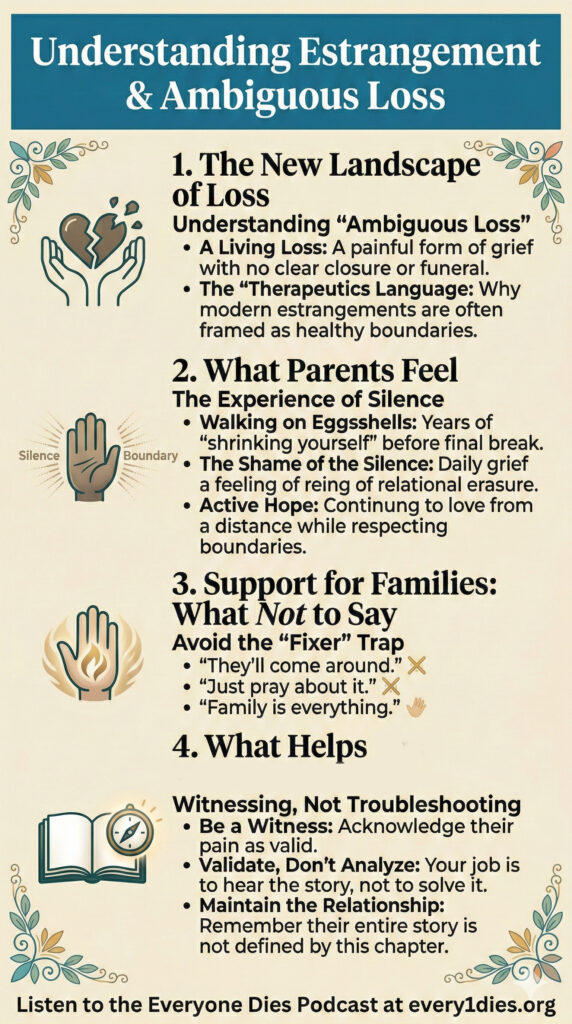
In recent years, going “no contact” with family members has become increasingly visible—and culturally normalized. While estrangement may be necessary or protective in some situations, many parents are quietly living with a form of grief that has no funeral, no timeline, and no socially accepted language.
In this episode of Everyone Dies, we explore the experience of parents whose adult children have severed contact. Drawing on therapeutic language and the concept of ambiguous loss, we examine why this form of grief is uniquely disrupting: the child is alive, but voluntarily absent.
We speak directly to friends, neighbors, and loved ones who want to help but don’t know what to say—and to parents who are carrying this pain in silence. This is not an episode about assigning blame or choosing sides. It is about understanding complexity, resisting simplistic narratives, and learning how to witness suffering without fixing it. If you know someone who says, “We don’t really talk anymore,” and then quickly changes the subject— this episode is for you.
When a Child Is Alive but Gone: Understanding Estrangement as Ambiguous Loss
Estrangement between parents and adult children has always existed. What is new is how visible, and culturally framed, it has become. Increasingly, adult children describe severing family ties using therapeutic language: boundaries, healing, safety, and self-protection. In some cases, estrangement is necessary. In others, it emerges from a complex accumulation of misunderstanding, silence, conflict, and fear.
What often goes unseen is the experience of the parent left behind.
This is not the grief of death. There is no funeral, no ritual, no casseroles dropped at the door. Instead, parents live with a constant psychological tension: a child who is alive, but unreachable. The phone remains silent. Holidays pass. Grandchildren grow up elsewhere. The loss runs quietly in the background of daily life.
In clinical terms, this is ambiguous loss, one of the most destabilizing forms of grief. It offers no resolution and no clear path forward. Parents often replay memories endlessly, searching for what they missed or how they failed. Many carry deep shame, believing their entire identity has been reduced to this rupture.
Friends frequently want to help, but don’t know how. The instinct is to advise, troubleshoot, or ask questions that unintentionally suggest blame: Have you apologized? Have you tried again? Most parents have already tried, often at great emotional cost.
What helps most is not fixing. It is witnessing.
To acknowledge the loss.
To speak aloud what you know to be true about who this person has been.
To sit with uncertainty without demanding resolution.
Estrangement is not simple. Grief rarely is. And bearing witness, without judgment, may be one of the most meaningful forms of care we can offer.
Related Content:
- S6E45: When Closure Isn’t Possible – Learn more about the “Ambiguous Loss” mentioned in today’s educational segment.
- S4E50: You Can’t Appease an Aggressor; How to Handle Aggressive Situations – “Shrinking yourself” or “walking on eggshells” does not work against a toxic personality.
- S5E6: Mothers and Their Daughters, A Blessing and a Curse – Mother-daughter relationships can sometimes be tricky, especially while in a caregiver role. Learn tips to improve communication
References:
- What to Do When Your Child Wants to Cut Ties
- Like Brooklyn Beckham, Why Some Kids Cut Ties With Parents
- Unpacking the Epidemic of Parental Estrangement | Psychology Today
- Haack, R., (2026). If You Know an Estranged Parent, Please Read This
Resources:
- Parents of Estranged Adult Kids : PEAK Support Network
- Parents, “check” your guilt after adult child estrangement (a challenge) – Done With the Crying
- Thoughts from a Therapist: Rachel Haack, MA, MFTI | Substack
- The Ten Things Estranged Parents Are Told They’re Doing Wrong
- “Fault Lines” by Dr. Karl Pillemer explores the complexities of family estrangement and offers practical strategies for reconciliation based on extensive research and personal stories. Available here: https://a.co/d/068qlJAI
- “Rules of Estrangement” by Joshua Coleman offers a compassionate guide for parents dealing with the painful experience of estrangement from their adult children, exploring its cultural causes and providing practical advice for healing and reconciliation. Available here: https://a.co/d/iYVnk8h
- If You Know an Estranged Parent, Please Read This by Rachel Haack, LMFT, is a therapist’s letter to the friends who want to help, but don’t know how. (Thank you Rachel for letting us use your writing for this podcast.)

https://blog.feedspot.com/palliative_care_podcasts/

Everyone Dies: and yes, it is normal!
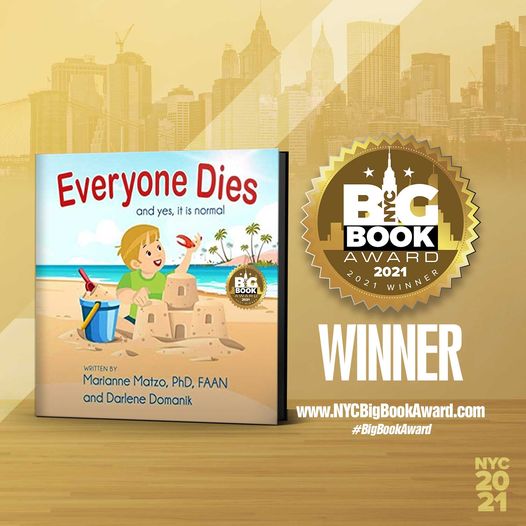
Everyone Dies (and yes, it is normal) is a story about a young boy named Jax who finds something special on the beach where he and his grandpa Pops are enjoying a wonderful day. Pops helps Jax understand that death is a normal part of life. This book provides an age appropriate, non-scary, comfortable way to introduce the important topic of mortality to a preschool child. Its simple explanation will last a lifetime. Autographed copies for sale at: www.everyonediesthebook.com. Also available at Amazon
Mourning Jewelry
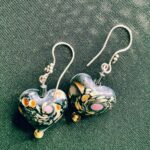
We offer a way to memorialize your loved one or treasured pet with a piece of handmade jewelry. When people comment on it and the wearer can say for example “I received this when my mother died” which opens the conversation about this loss. All our jewelry is made with semi-precious stones and beads, vintage beads, and pearls. You can choose between earrings or bracelets and the color family. Learn More