
Indigenous maternal health is in a critical state – learn why 93% of pregnancy-related deaths in these communities are preventable. Explore the healthcare gaps for First Nations and how restorative midwifery is working to save lives.
What You’ll Learn:
- The 93% Preventability Gap: While 87% of all U.S. maternal deaths are preventable, that number rises to 93% for Native American and Alaska Native populations, signaling a critical failure in the care pipeline.
- The Postpartum “Blind Spot”: 68% of pregnancy-related deaths occur between one week and one year after birth. Most of these happen after 43 days postpartum, a period when many mothers lose insurance or clinical support.
- Leading Causes are Treatable: Mental health conditions and infections are the top underlying causes. These are highly manageable when caught early, yet they often go unnoticed in “medical deserts.”
- The Power of Advocacy: Learn why every mother should explicitly state, “I was pregnant within the last year,” to every healthcare provider they see to trigger appropriate clinical protocols.
- Restoring Traditions: How Indigenous-led midwifery and the Momnibus Act are working to dismantle systemic bias and return to culturally safe birthing practices.
Timestamps:
- 00:00 – Introduction: The Crisis of Preventable Deaths
- 01:26 – Recipe: Traditional First Nations Double Cornbread Muffins
- 01:47 – Reclaiming the Birth Circle: The Rise of Indigenous Midwifery
- 05:15 – Dr. Jeanna Ford: Investigating the Gaps in Native Maternal Health
- 10:01 – The 4th Trimester: Why 68% of Deaths Happen After Delivery
- 15:24 – Beyond the Physical: Mental Health & Infection as Leading Causes
- 39:41 – Form Follows Funding: Advocacy and Systemic Healthcare Change
- 43:43 – Life-Saving Advocacy: Urgent Maternal Warning Signs to Know
- 48:48 – Final Thoughts: Every Day is a Gift
Beyond the Statistic: Reclaiming the Circle of Protection for Indigenous Mothers
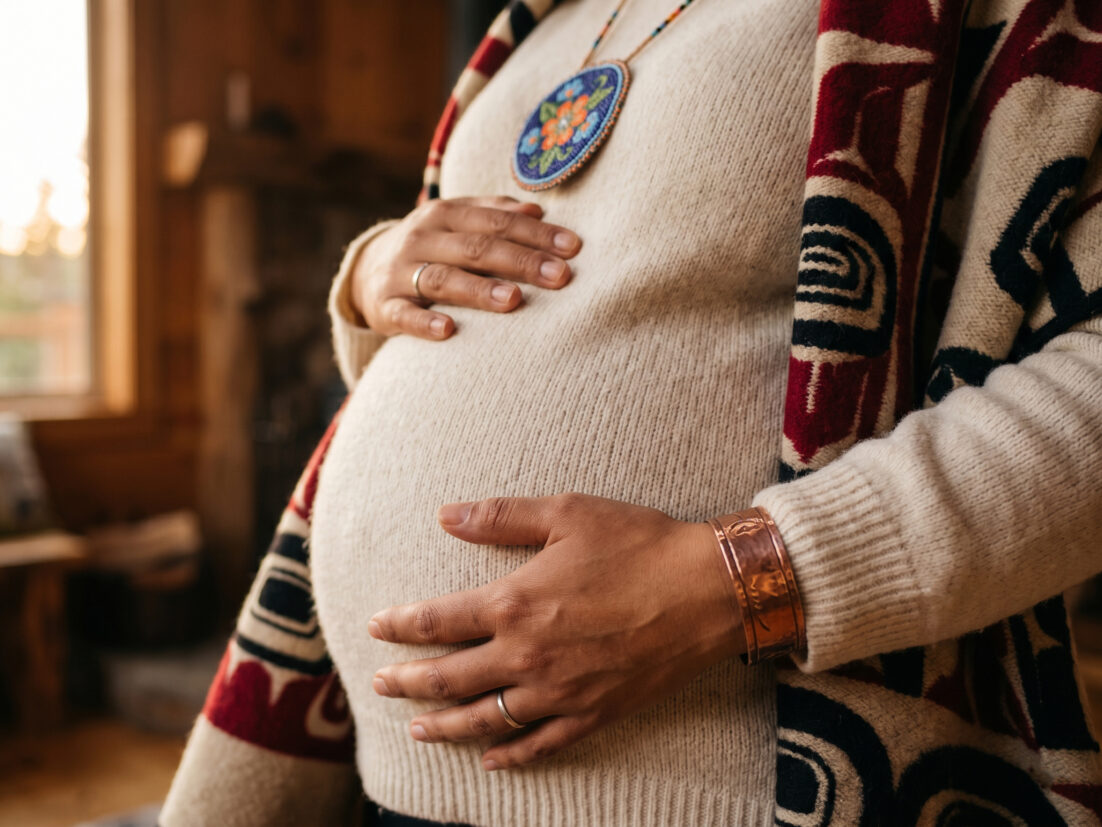
In 2024, Native American and Alaska Native people had the highest pregnancy-related mortality ratio of any major demographic group in the United States. That alone should stop us. But the most striking number may be this: 93% of these deaths are considered preventable.
So what’s going on?
The Reality Behind the Numbers
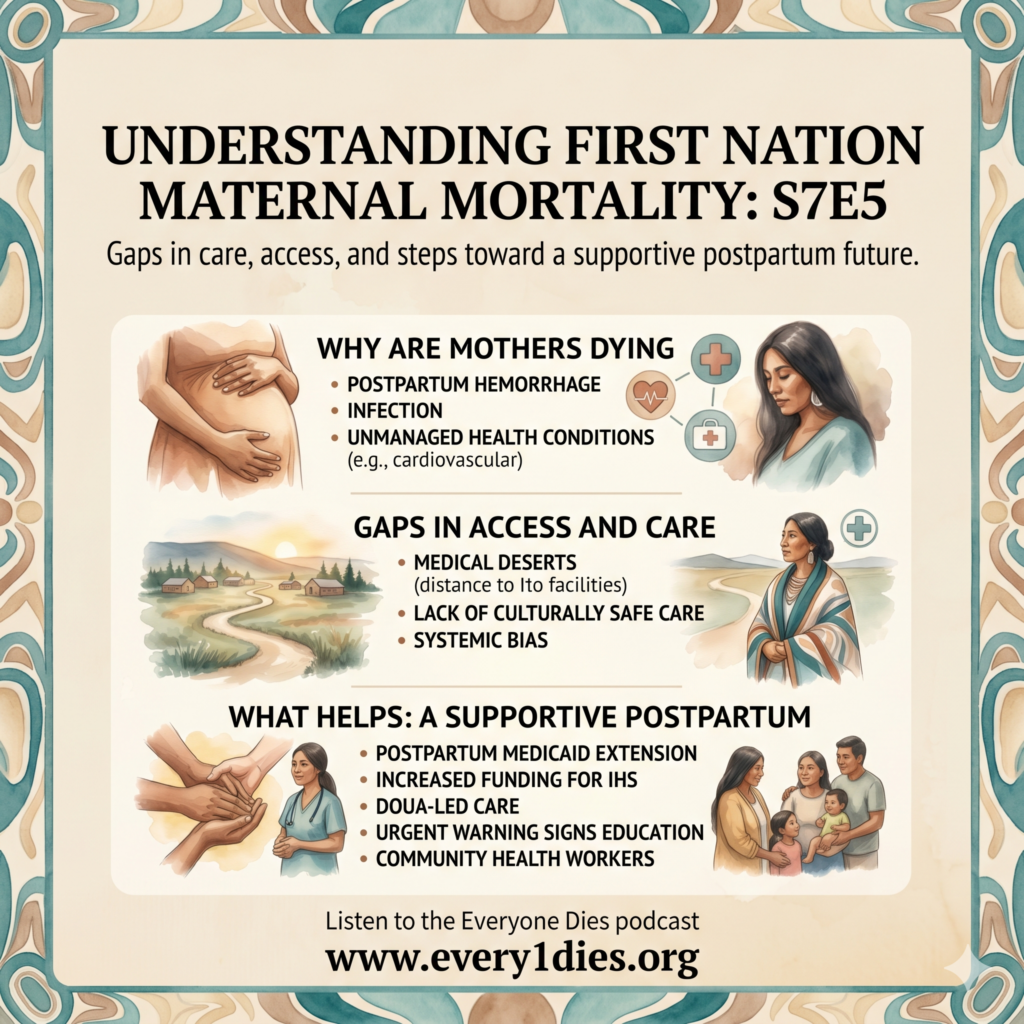
According to the Centers for Disease Control and Prevention (CDC), the leading causes of pregnancy-related death among Native American and Alaska Native women include mental health conditions and infection.
These are not rare, unpredictable events. They are conditions that can be recognized, treated, and often prevented. Even more concerning is when these deaths occur.
Approximately 68% happen between delivery and one year postpartum, with many occurring 43 days to one year after birth. This is long after most people assume the danger has passed.
Gaps in Access and Care
Access to care is a major factor. A 2024 study found that about 75% of Native American and Alaska Native pregnant people did not have access to care through the Indian Health Service (IHS) around the time of delivery. As a result, most births—more than 90%—occur outside IHS facilities.
Even within IHS settings, care is not always consistent. A federal review found that over half of patients did not receive care aligned with national clinical guidelines.
Insurance instability also plays a role. Native patients are more likely to experience gaps in coverage during the critical time surrounding pregnancy and postpartum recovery.
Why Review Committees Matter
Maternal mortality review committees exist to study these deaths and identify patterns. They analyze what happened, why it happened, and what could have been done differently.
Efforts are now underway to increase tribal participation in these committees—and even support tribes in creating their own. This matters. Because solutions are more effective when they are informed by the communities they are meant to serve.
What You Can Do
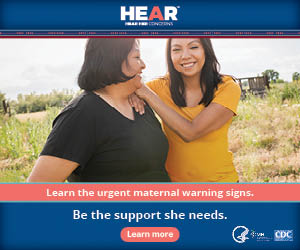
This is not just a systems issue. There are ways individuals can help.
- Learn the urgent maternal warning signs
- Take concerns seriously—especially after delivery
- Encourage medical care when something feels wrong
- Support follow-up visits and ongoing care
- Advocate for policies that improve access and funding
There is a saying in public health:
“Form follows funding.”
What we choose to fund reflects what we value—and determines what outcomes we get.
The Bottom Line
These deaths are not inevitable. They are preventable. And they tell us exactly where change is needed. The question is whether we’re willing to listen—and act.
Our Guest: Dr. Jeanna Ford DNP, APRN, ACNS-BC, ACHPN, FPCN, FCNS

Dr. Jeanna Ford is a Clinical Nurse Specialist in the field of palliative care and hospice. Dr. Ford is a national speaker, published author, and focuses her clinical expertise in the area of cultural sensitivity at the end of life with an emphasis on indigenous populations. She currently works as the Clinic Director and APRN for the University of New Mexico Hospital’s outpatient palliative care program as well as serves as faculty for the Center to Advance Palliative Care and for the Hospice and Palliative Nurses Association.
Dr. Ford shares her perspective from her work in hospice and palliative care, including Native American and Hispanic communities.
References:
Related Content
- More interviews with Dr. Jeanna Ford:
- Native Americans Are Dying From Pregnancy. They Want a Voice To Stop the Trend. – KFF Health News
- Data from the Pregnancy Mortality Surveillance System | Maternal Mortality Prevention | CDC
- Koemel, N. A., Biswas, R. K., Ahmadi, M. N., Teixeira-Pinto, A., Hamer, M., Rezende, L. F. M., Mitchell, J., Leech, R. M., Sawan, M., Allman-Farinelli, M., Dumuid, D., Bauman, A., Maher, C., Barrett, S., Chow, C., Gibson, A. A., Raubenheimer, D., Hocking, S. L., Williams, K., Cistulli, P. A., … Stamatakis, E. (2026). Minimum combined sleep, physical activity, and nutrition variations associated with lifeSPAN and healthSPAN improvements: a population cohort study. EClinicalMedicine, 92, 103741. https://doi.org/10.1016/j.eclinm.2025.103741
- Pregnancy-Related Deaths Among American Indian or Alaska Native Women: Data from Maternal Mortality Review Committees
- Liddell, J. L., Interrante, J. D., Sheffield, E. C., Baker, H. A., & Kozhimannil, K. B. (2024). Health Insurance Type and Access to the Indian Health Service Before, During, and After Childbirth Among American Indian and Alaska Native People in the United States. Women’s health issues: official publication of the Jacobs Institute of Women’s Health, 34(6), 562–571. https://doi.org/10.1016/j.whi.2024.08.002
- Indigenous Midwifery: Reinventing Native Pregnancy and Birth
Resources
- Hear Personal Stories of Pregnancy-Related Complications from American Indian Women https://www.cdc.gov/hearher/aian/stories.html
- Posters and Handouts for American Indian and Alaska Native Communities: https://www.cdc.gov/hearher/campaign-resources-aian/posters-handouts.html
- How to help: https://www.cdc.gov/hearher/docs/pdf/CDC-Hear-Her-Family-Friends-h.pdf
- These 3 tiny lifestyle changes might give you a longevity boost – The Washington Post

Use the Feedspot RSS reader to find more.

Everyone Dies: and yes, it is normal!
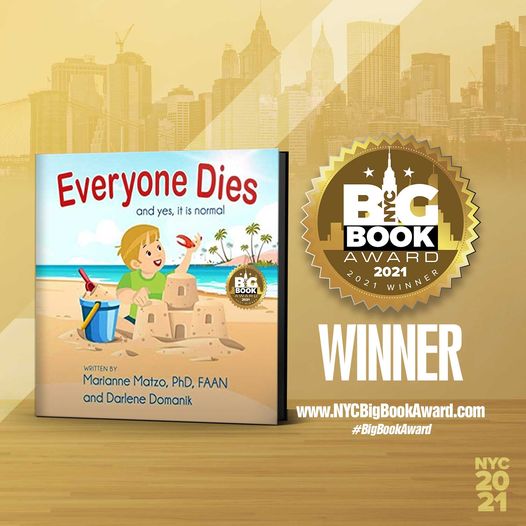
Everyone Dies (and yes, it is normal) is a story about a young boy named Jax who finds something special on the beach where he and his grandpa Pops are enjoying a wonderful day. Pops helps Jax understand that death is a normal part of life. This book provides an age appropriate, non-scary, comfortable way to introduce the important topic of mortality to a preschool child. Its simple explanation will last a lifetime. Autographed copies for sale at: www.everyonediesthebook.com. Also available at Amazon
Mourning Jewelry

We offer a way to memorialize your loved one or treasured pet with a piece of handmade jewelry. When people comment on it and the wearer can say for example “I received this when my mother died” which opens the conversation about this loss. All our jewelry is made with semi-precious stones and beads, vintage beads, and pearls. You can choose between earrings or bracelets and the color family. Learn More