


Want to Arrive? Dress for the Slide! Motorcycle fatalities are 24x higher per mile than in autos, but you can improve your odds with full-face helmet to guard against head trauma, airbag vests to protect neck and torso, and most of all: situational awareness.
In This Episode:
- 00:00 – Intro: Beyond the “Suicide Machine” – The Reality of the Ride
- 02:34 – The Last Ride: David Ritter’s Poetic Tribute to Fallen Riders
- 03:33 – The Risk Assessment: Dr. Robby’s Sabbatical and Survival Odds
- 05:03 – The Anatomy of Danger: Speed, Skill, and Vulnerability on Two Wheels
- 10:57 – Armor for the Slide: Why Quality Gear is Your Best Insurance Policy
- 12:53 – Protect the Processor: The Critical Role of Helmets in Impact Survival
- 17:09 – Road Awareness: Identifying and Avoiding the Primary Causes of Crashes
- 19:53 – Outro: Every Mile is a Gift – Ride Accordingly
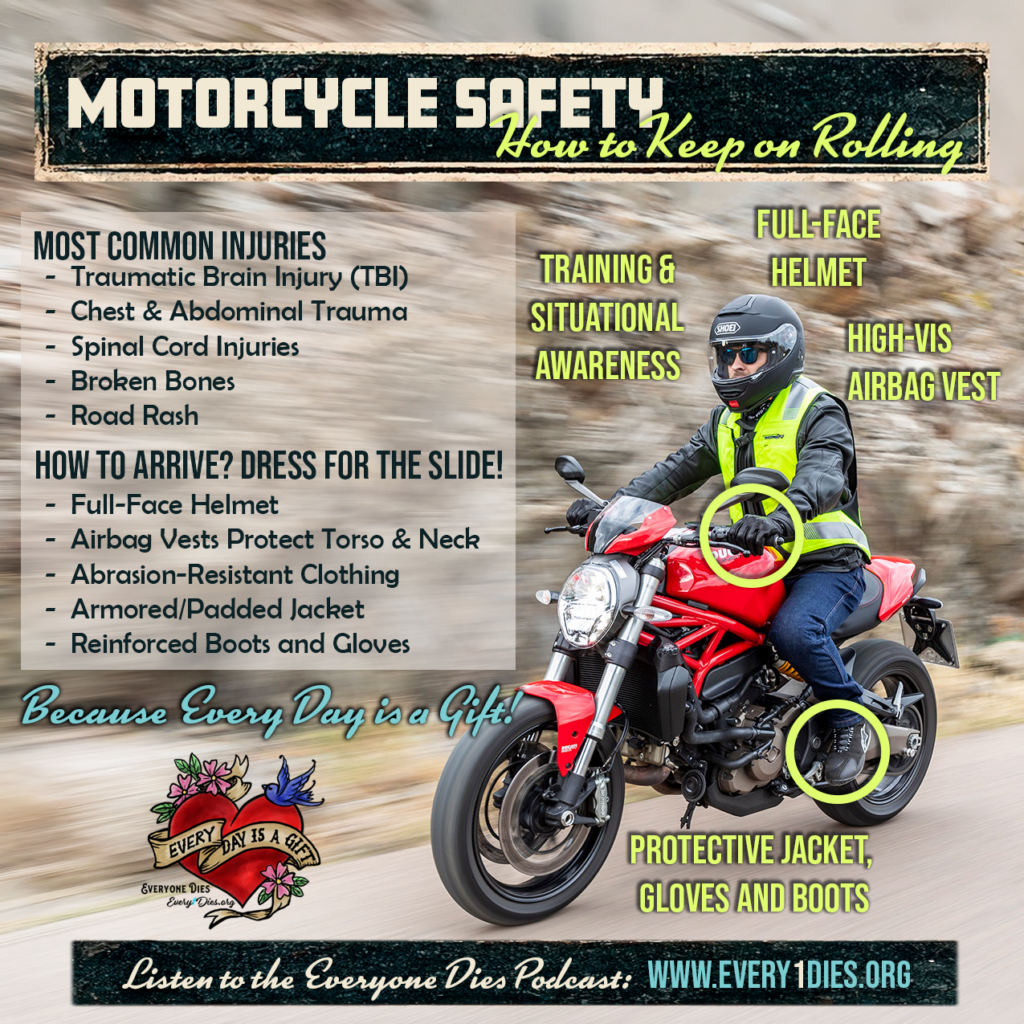
Keep the shiny side up and the grey matter in!
As most veteran riders will tell you, there are two types of people on the road: Those who have gone down, and those who are going to go down. Today, we’re talking about how to make sure you walk away so you can keep on rollin’!
Motorcycles represent freedom for many people, the open road, the wind, the sense of control. But safety is a very different story.
Motorcycles make up less than 4% of registered vehicles in the United States, yet they account for nearly 15% of all roadway fatalities. Each year, approximately 6,000 motorcyclists die in crashes. When you compare the risk per mile traveled, riding a motorcycle is about 24 times more dangerous than being in a car.
What Happens in a Crash
Motorcycle riders don’t have the protection of a vehicle frame, airbags, or seatbelts. Even low-speed crashes can result in serious injuries such as:
- Broken bones from impact or ejection
- Severe road rash requiring skin grafts
- Traumatic brain injuries (TBI), the leading cause of death
- Chest trauma affecting the heart and lungs
- Spinal cord injuries that can be immediately fatal
- Head trauma alone accounts for most motorcycle-related deaths.
The Role of Helmets
Helmets are not a minor safety feature; they are the most effective protection riders have. Wearing a helmet can:
- Reduce risk of death by 37% for riders
- Reduce risk of death by 41% for passengers
- Protect against catastrophic brain injury.
- Full-face helmets provide even greater protection, especially for the jaw and face.
So Why Are Helmet Laws Being Repealed?
The answer is not simple. Across the U.S., 33 states have weakened or repealed universal helmet laws. The reasons include:
- Emphasis on personal freedom
- Political pressure from advocacy groups
- Cultural identity tied to riding
But the consequences are measurable. After Michigan repealed its helmet law hospital costs increased by 26% per crash patient and because many riders were uninsured, shifting costs to hospitals and taxpayers.
Following the repeal of helmet laws in Arkansas, non-helmeted fatalities rose from 47% to 78% and alcohol-related deaths among non-helmeted riders surged dramatically.
Who Is Most at Risk?
- Men account for 92% of motorcycle fatalities
- Ages 25–34 have the highest fatality rates
- Riders over 50 are a growing risk group due to physical changes and slower reaction times
- 36% of fatal crashes involve unlicensed riders
The Bottom Line
This isn’t about whether riding is enjoyable, it’s about understanding the trade-offs. Wearing a helmet doesn’t eliminate risk, but it significantly improves the odds of surviving long enough to tell the story. And survival matters because the consequences of a crash don’t end with the rider. They extend to families, healthcare systems, and communities.
The question isn’t whether you should ride. The question is whether you understand the risk and take appropriate precautions.
Motorcycle Riding Realities: Frequently Asked Questions
Is this just another “don’t ride” lecture? Absolutely not. We know why you ride—the freedom of the “American dream.” This conversation is about the physics of staying in the saddle and ensuring that a “sabbatical” doesn’t become a permanent exit.
Why focus so much on helmets if it’s “my choice”? While the wind in your hair is a classic feeling, head trauma remains the leading cause of death in motorcycle accidents. We look at the mechanics of impact—specifically Traumatic Brain Injury (TBI)—to show how a helmet shifts the odds from a fatal event to a survivable one.
Is gear really effective at high speeds? Standard armor is designed for abrasion and impact, but there are “game-changers” like airbag vests. These systems provide a 360-degree cradle for the neck and protect the tailbone and kidneys—areas where traditional jackets often leave you exposed.
Episode Highlights & Key Takeaways
- The “Suicide Machine” Myth: We move past the stereotypes to look at the actual risk factors: speed, unlicensed riding, and the unique vulnerabilities of different age groups.
- Physics of the Crash: Understanding what happens to the human body during a blunt-force collision, including why chest and spinal injuries are the primary secondary risks after head trauma.
- Helmets are Key: Statistical evidence shows that helmets are 37-41% effective in preventing motorcycle deaths and 67% effective in preventing brain injuries.
- The Price of “Wind in Your Hair”: Analyzing the deadly and costly impact on road safety in states that have repealed mandatory helmet laws.
- Defensive Road Awareness: A breakdown of the primary causes of motorcycle crashes and how “situational awareness” is your most important piece of gear.
- The Airbag Advantage: Learn why mechanical airbag vests are becoming the new standard for riders who want professional-grade protection for their spine and internal organs.
Recipe of the Week:
References:
- “Gone Riding” by David Ritter
- “Born to Run” – Bruce Springsteen
- Motorcycle Accident Statistics You Need to Know in 2025
- Johnson, P. L., Picart, J. K., Hallway, A. K., Mullens, C. L., Levy, S. C., Hemmila, M. R., & Jean, R. A. (2026). Downstream Medical Cost of Repealing Universal Motorcycle Helmet Laws. Journal of the American College of Surgeons, 10.1097/XCS.0000000000001870. Advance online publication. https://doi.org/10.1097/XCS.0000000000001870
- Bledsoe, G. H., & Li, G. (2005). Trends in Arkansas motorcycle trauma after helmet law repeal. Southern medical journal, 98(4), 436–440. https://doi.org/10.1097/01.SMJ.0000154309.83339.C0
- 10 Top Motorcycle Accident Causes – Ride Vision
Resources:
- 10 Top Motorcycle Accident Causes – Ride Vision
- Motorcycle Safety Foundation – Meets DMV requirements in most states; advanced training to refine braking and cornering

Use the Feedspot RSS reader to find more.

Everyone Dies: and yes, it is normal!
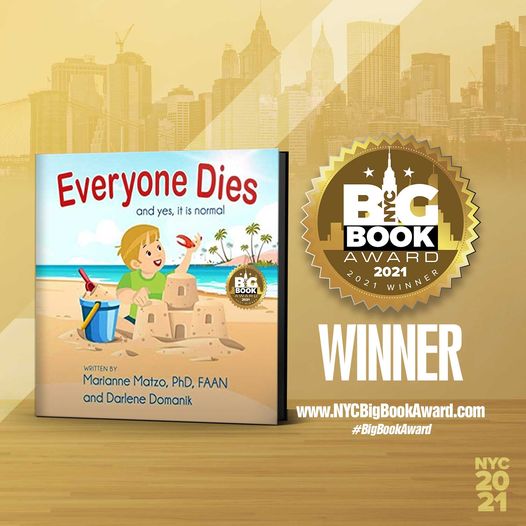
Everyone Dies (and yes, it is normal) is a story about a young boy named Jax who finds something special on the beach where he and his grandpa Pops are enjoying a wonderful day. Pops helps Jax understand that death is a normal part of life. This book provides an age appropriate, non-scary, comfortable way to introduce the important topic of mortality to a preschool child. Its simple explanation will last a lifetime. Autographed copies for sale at: www.everyonediesthebook.com. Also available at Amazon
Mourning Jewelry

We offer a way to memorialize your loved one or treasured pet with a piece of handmade jewelry. When people comment on it and the wearer can say for example “I received this when my mother died” which opens the conversation about this loss. All our jewelry is made with semi-precious stones and beads, vintage beads, and pearls. You can choose between earrings or bracelets and the color family. Learn More