
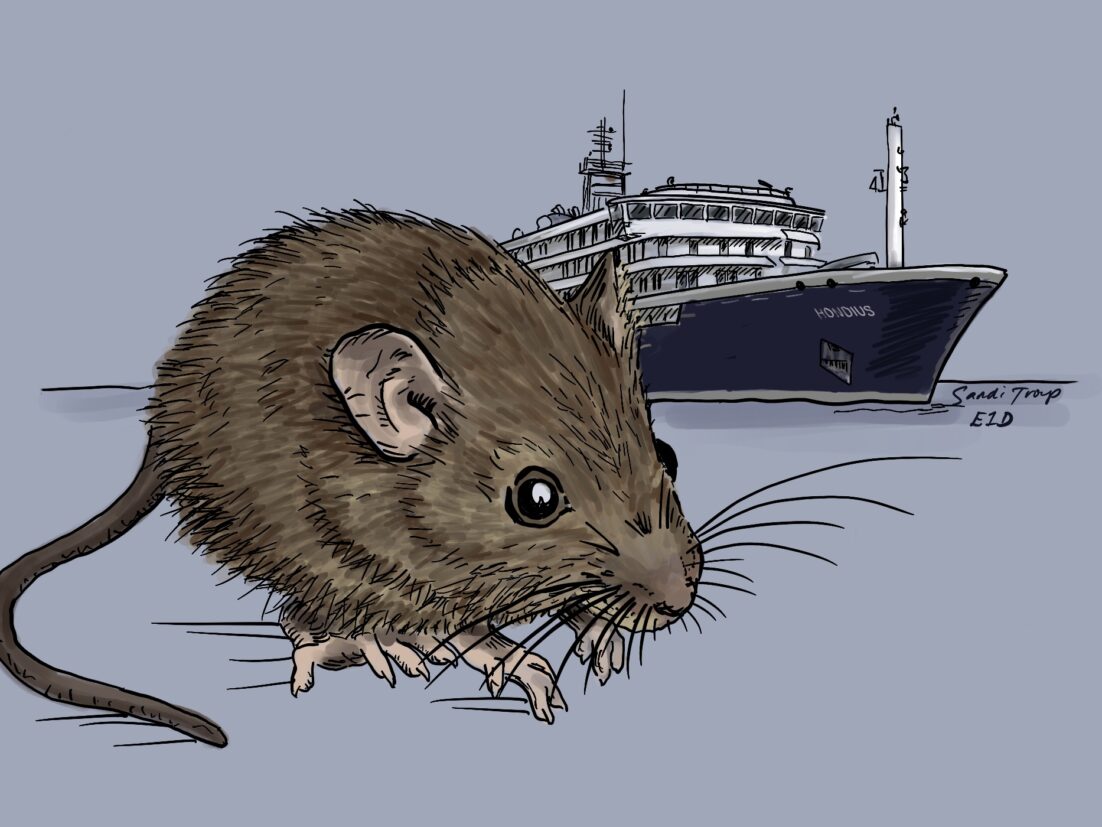
A deadly hantavirus outbreak linked to the expedition cruise ship MV Hondius has placed this rare but dangerous disease back into international headlines. In this episode of the Everyone Dies podcast, we explain what hantavirus is, how it spreads, why symptoms are often mistaken for the flu, and what people need to know to stay safe.
We discuss the recent cruise ship deaths, the earlier death of Betsy Arakawa, wife of actor Gene Hackman, and why the limited person-to-person transmission of the Andes strain of hantavirus concerns health officials.
You will learn:
- How hantavirus spreads
- The difference between Old World and New World hantaviruses
- Early warning signs and symptoms
- Why breathing problems can develop rapidly
- The incubation period after exposure
- Safe cleaning practices for rodent droppings
- How to reduce rodent exposure in homes, cabins, campers, and sheds
Hantavirus infections are rare, but the disease can become deadly very quickly. Awareness, prevention, and early medical attention may save lives.
Timestamps:
- 00:00 – Intro: What You Need to Know about Hantavirus
- 01:57 – Recipe of the Week: Prune Bacon Jam Crustini
- 02:25 – Current State of Hantavirus Response in America
- 07:47 – Hantavirus: What it is and How It’s Transmitted
- 09:53 – Why a Long Incubation Time is Problematic
- 13:12 – Hantavirus Symptoms and When to Seek Medical Attention
- 18:28 – When I Go by Donna Ashworth
- 19:55 – Outro
Hantavirus: What the Cruise Ship Outbreak Teaches Us About a Rare but Dangerous Disease
In some parts of the world, rodents carry a rare virus called hantavirus that can become deadly very quickly. It was recently brought to our attention after a deadly outbreak linked to the expedition cruise ship MV Hondius. International health agencies are now monitoring passengers and crew after multiple infections and deaths were connected to the voyage.
While hantavirus is serious, it is important to remember that it remains rare. This is not another COVID-style pandemic. But understanding the disease matters because symptoms can progress rapidly and early warning signs are often mistaken for the flu.
What Is Hantavirus?
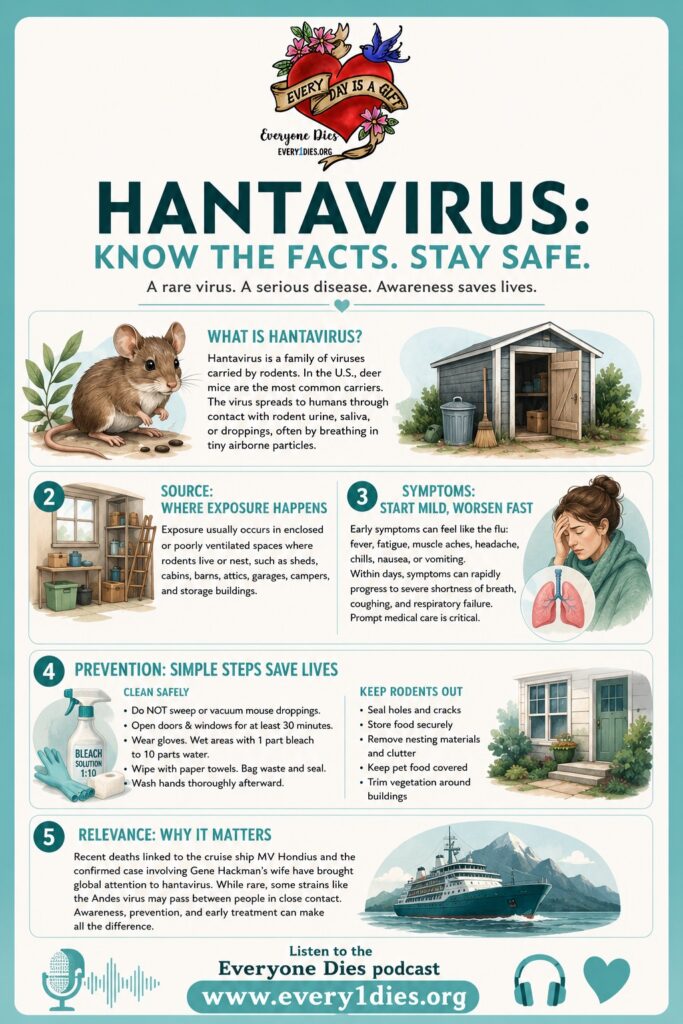
Hantavirus is not one single virus. It is a family of viruses carried primarily by rodents. In the United States, deer mice are common carriers, although rats and other rodents may also spread certain strains. The virus is usually transmitted when people breathe in tiny airborne particles contaminated by rodent urine, saliva, or droppings. This often happens while cleaning enclosed spaces like:
- sheds
- garages
- campers
- barns
- cabins
- attics
- storage buildings
In North America, hantavirus can cause Hantavirus Pulmonary Syndrome (HPS), a severe illness that can rapidly lead to respiratory failure.

Why the Cruise Ship Outbreak Matters
The recent outbreak aboard the MV Hondius raised concern because investigators identified the Andes strain of hantavirus. Most hantaviruses do not spread from person to person. However, the Andes strain is unusual because limited human-to-human transmission has been documented in rare cases involving prolonged close contact.
Health officials continue to say the overall public risk remains low. Investigations are ongoing to determine whether exposure occurred before the voyage, during the trip, or between passengers in close quarters.
Symptoms Often Start Like the Flu
One reason hantavirus can be dangerous is that early symptoms seem mild or familiar.
People may first experience:
- fever
- muscle aches
- fatigue
- headache
- chills
- nausea
- vomiting
- Some people also develop abdominal pain or diarrhea.
But within several days, symptoms may suddenly worsen. Fluid can rapidly build up in the lungs, leading to:
- severe shortness of breath
- chest tightness
- coughing
- low oxygen levels
- respiratory failure
Many patients require intensive care and mechanical ventilation. The death rate for Hantavirus Pulmonary Syndrome remains extremely high, estimated around 35 to 40 percent even with advanced medical treatment.
The Incubation Period Can Delay Diagnosis
One challenging aspect of hantavirus is the delay between exposure and symptoms. Most people become sick between one and eight weeks after exposure, although many develop symptoms within two to four weeks. Someone may clean a shed or camper and feel perfectly fine for weeks before becoming ill. By then, they may no longer connect their symptoms to rodent exposure.
How to Protect Yourself
The CDC recommends never sweeping or vacuuming mouse droppings because that can force virus particles into the air.
Instead:
- open doors and windows before cleaning
- wear gloves
- spray contaminated areas with disinfectant or bleach solution
- wipe materials carefully with paper towels
- place waste into sealed plastic bags
- wash hands thoroughly afterward
- Reducing rodent access to homes and buildings also helps:
- seal cracks and openings
- store food securely
- remove nesting materials
- trim vegetation near structures
- keep pet food covered
Why Awareness Matters
Most people will never encounter hantavirus. But rare diseases still matter because they remind us how connected health, environment, travel, and human behavior really are. Something as simple as opening a long-closed cabin or sweeping out a shed can sometimes carry hidden risks. Awareness matters. Prevention matters. And early medical attention may save your life.
Related Episodes:
S6E32: When a Cough Becomes a Killer: What Everyone Needs to Know About Pneumonia
References:

- Recipe of the Week: Prune Bacon Jam Crostini Recipe – Yummy Healthy Easy
- Hantavirus: Anatomy of a Fractured Global Response | MedPage Today
- Hantavirus outbreak tests Trump officials who criticized covid response – The Washington Post
- Adult Dies of hantavirus in Colorado – Reuters
Resources
- DONNA ASHWORTH | Author and lover of words.
- Loss: The New Collection: Words to weather the many waves of grief by Donna Ashworth

Use the Feedspot RSS reader to find more.

Everyone Dies: and yes, it is normal!

Everyone Dies (and yes, it is normal) is a story about a young boy named Jax who finds something special on the beach where he and his grandpa Pops are enjoying a wonderful day. Pops helps Jax understand that death is a normal part of life. This book provides an age appropriate, non-scary, comfortable way to introduce the important topic of mortality to a preschool child. Its simple explanation will last a lifetime. Autographed copies for sale at: www.everyonediesthebook.com. Also available at Amazon
Mourning Jewelry

We offer a way to memorialize your loved one or treasured pet with a piece of handmade jewelry. When people comment on it and the wearer can say for example “I received this when my mother died” which opens the conversation about this loss. All our jewelry is made with semi-precious stones and beads, vintage beads, and pearls. You can choose between earrings or bracelets and the color family. Learn More