

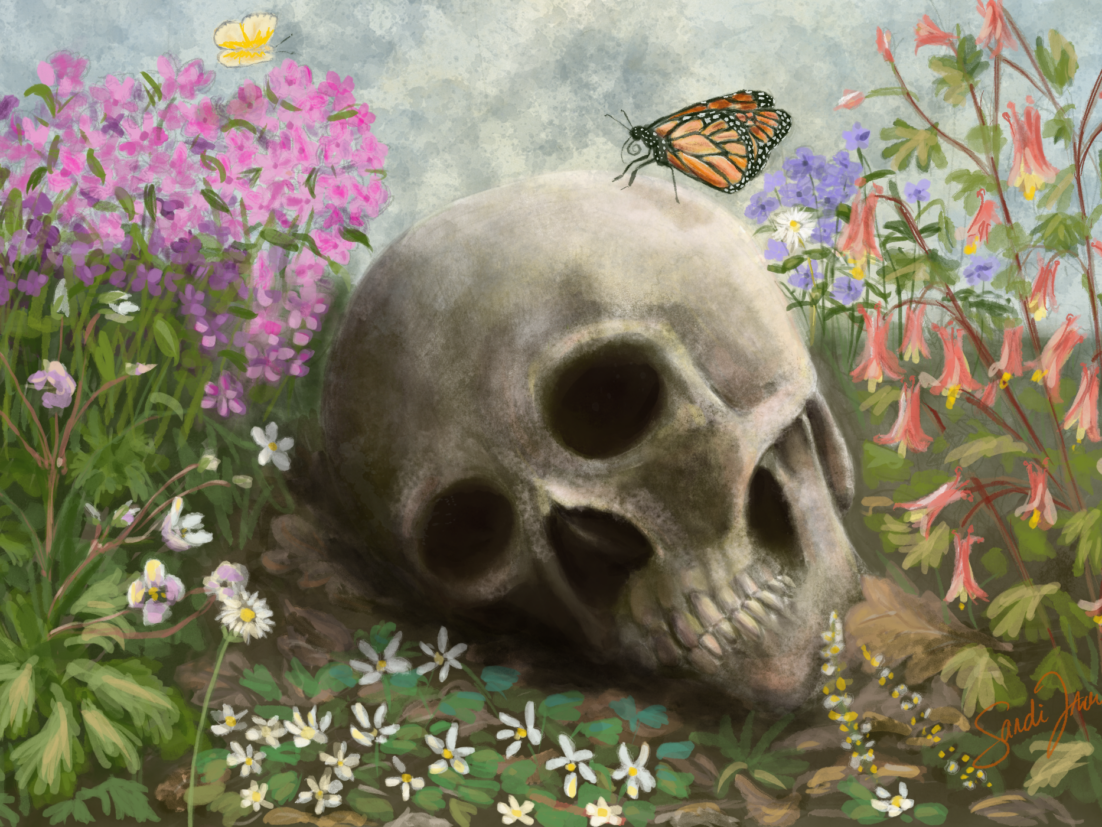
Embrace mortality to live with intention. Explore the history of Memento Mori, the Grim Reaper, Liberace’s legacy, and why facing death changes everything.
Memento Mori. What Does it Really Mean?
You are going to die. What if remembering that is the key to actually living well? Most of us don’t spend much time thinking about death. But when we do, something interesting happens: we start to see what matters.
We spend a lot of time in our podcasts not only talking about death but also actions we can take for healthier living. Today we are going to talk about another way we can make our lives better, by thinking about death. We’re kicking off a brand-new series exploring the humanities and the art of dying.
From the lavish life and hidden cause of death of Liberace to the driving funk of The Rolling Stones’ “Dancing with Mr. D,” we explore how history, art, and myth use mortality not to create fear, but to bring ultimate clarity to life. Tune in, grab Liberace’s recipe for Singapore and Malaysian Satay, and learn how to carpe the heck out of your diem.
Timestamps:
00:00 – Intro: How Can Awareness of Death Change Our Life?
03:18 – Recipe-Liberace’s Singapore and Malasian Satay Appetizer
04:32 – Liberace’s Obituary
10:23 – The Meaning of Memento Mori
13:45 – The Origin of the Grim Reaper
16:50 – The Guides of Souls: Psychopomps and Charon’s Boat
19:57 – “Dancing with Mr D” – Rolling Stones
22:24 – Outro – Carpe the Heck Out of Your Diem!
Memento Mori: Why Remembering Death Might Be the Most Important Thing You Do
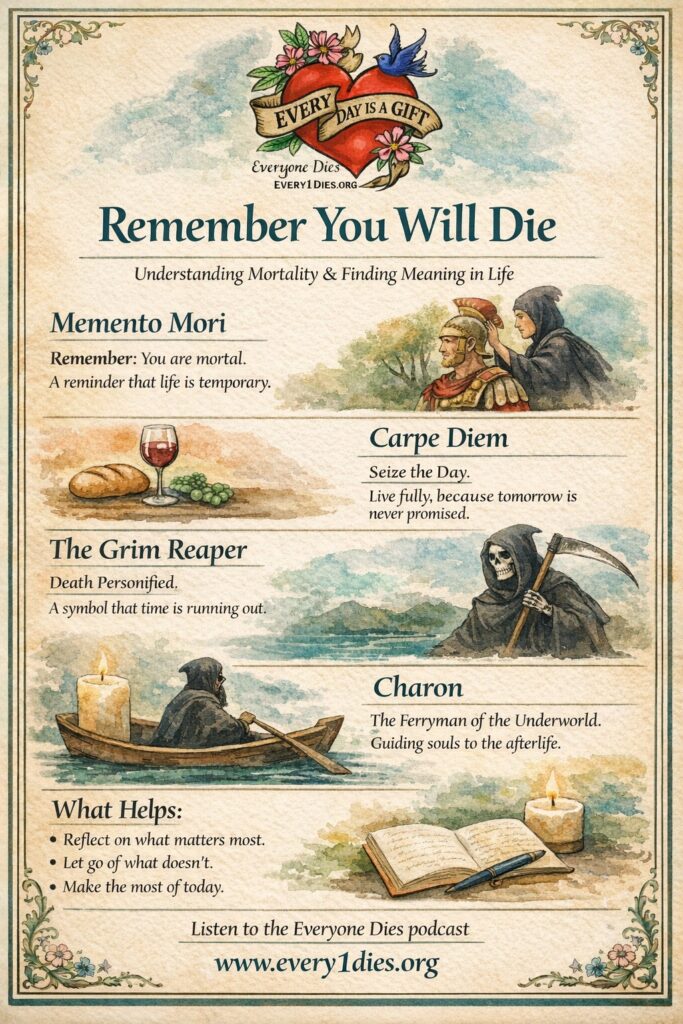
In ancient Rome, when a victorious general paraded through the streets, there was someone behind him, not celebrating, but whispering a quiet truth: “Remember, you are only a man.” This was memento mori, a reminder of mortality, delivered at the height of success. It seems almost contradictory. Why bring up death in a moment of triumph? Because humans forget.
Death as a Teacher, Not an Enemy
Across cultures and centuries, death has never been just an ending. It has been a guide. The Romans paired memento mori with carpe diem: seize the day. But not in a reckless way—not indulgence for indulgence’s sake. It was a call to awareness: life is limited, so use it well.
Later, Christian teachings shifted the emphasis. Death wasn’t just a reason to live fully—it was a reason to live meaningfully. A moral checkpoint. A reminder that what we build, earn, and accumulate is temporary. Different framing, same truth: We don’t have forever.
Why Death Has a Face
At some point, humans did something fascinating, they gave death a body: a skeleton, a robe, and a scythe.
The Grim Reaper didn’t appear randomly. These images grew out of centuries of trying to understand something we cannot see. The skeleton reminded people that death strips us all to the same form. The scythe symbolized harvesting, death as a natural, inevitable process. Death became a character because the human mind needs something to look at, something to talk to, something to understand. And maybe something to negotiate with.
The Fear—and the Missed Opportunity
In modern culture, we’ve pushed death away. We avoid talking about it. We soften it, delay it, medicalize it, and hide it. But when you remove death from daily awareness, something else disappears too: Urgency. Clarity. Perspective. Memento mori was never about fear. It was about focus.
So What Changes If You Remember?
If you truly understood, deep down, that your time is limited:
- Would you hold onto grudges as tightly?
- Would you delay the conversations that matter?
- Would you spend your time the same way?
This is where memento mori becomes practical. Not philosophical or abstract. But immediate.
The Quiet Truth
You are going to die. Not today, most likely. But someday. And instead of letting that thought create fear, what if it created intention? What if it helped you choose better, love deeper, and speak more honestly? That was always the purpose. Not to darken life. But to sharpen it.
References:

- Recipe of the Week: Liberace’s Singapore and Malaysian Satay
- Liberace, Flamboyant Pianist, Is Dead: Horace. (1927). Odes (C. E. Bennett, Trans.). Harvard University Press.
- Khayyam, O. (1859). Rubáiyát of Omar Khayyám (E. FitzGerald, Trans.).
- Barrie, J. M. (1911). Peter and Wendy. Hodder & Stoughton.
- Alighieri, D. (2003). Inferno (A. Mandelbaum, Trans.). Bantam Classics.
- (Original work published ca. 1320)
- Tait, H. (Ed.). (1999). The art of death in the Middle Ages. British Museum Press.
- Mâle, E. (1984). Religious art in France: The late Middle Ages. Princeton University Press.
- Huizinga, J. (1996). The waning of the Middle Ages. Penguin Books. (Original work published 1919)
Resources:
- The Rolling Stones – Dancing With Mr D – OFFICIAL PROMO: https://www.youtube.com/watch?v=9hw1SKn5eFM
- Death Shows Up | Monty Python’s The Meaning of Life: https://www.youtube.com/watch?v=DIZ6MilKAWQ
Related Episodes:
- S3E43: How Accepting Death Can Improve Your Life – If you want to dive deeper into how breaking the culture of silence directly transforms your day-to-day choices, this episode is the perfect next step.
- S4E10: How to turn Aging into a Superpower – Discover how embracing your mortality strips away the trivial noise of daily life, leaving room for a vivid, beautiful, and highly intentional perspective on the time we have left.
- S7E04: An App That Predicts Your Death Date: Would You Want to Know? – If you want a modern, high-tech twist on memento mori, this episode explores what happens when we give death a digital face instead of a historical one. It looks at how a real-time countdown clock can either trigger data anxiety or act as the ultimate motivator to choose better, live deeper, and actively reclaim your time.

Use the Feedspot RSS reader to find more.

Everyone Dies: and yes, it is normal!
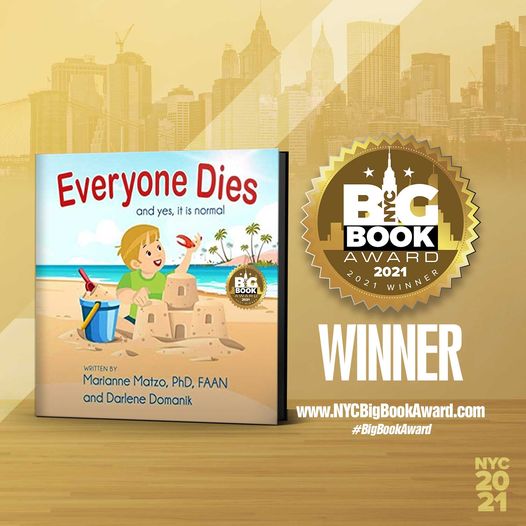
Everyone Dies (and yes, it is normal) is a story about a young boy named Jax who finds something special on the beach where he and his grandpa Pops are enjoying a wonderful day. Pops helps Jax understand that death is a normal part of life. This book provides an age appropriate, non-scary, comfortable way to introduce the important topic of mortality to a preschool child. Its simple explanation will last a lifetime. Autographed copies for sale at: www.everyonediesthebook.com. Also available at Amazon
Mourning Jewelry

We offer a way to memorialize your loved one or treasured pet with a piece of handmade jewelry. When people comment on it and the wearer can say for example “I received this when my mother died” which opens the conversation about this loss. All our jewelry is made with semi-precious stones and beads, vintage beads, and pearls. You can choose between earrings or bracelets and the color family. Learn More