
Constipation isn’t just uncomfortable—it can become dangerous. Especially after illness, surgery, or certain medications, what seems minor can turn into something serious.
In this episode, we explain what constipation is, why it happens, and what your body needs to function the way it should. We break down the role of hydration, movement, and fiber, and why small changes can prevent bigger problems.
We also talk about who is most at risk, including people with chronic illness, those recovering from abdominal surgery, and anyone taking medications that slow the gut.
In this Episode:
Transcript
- 00:00 – Intro: The High-Risk Gut (Surgery, Aging, and GLP-1 Meds)
- 01:33 – Fiber-lous Recipe: Spicy Deviled Walnuts
- 02:04 – From Berated Brother to Breakfast Boss: The W.K. Kellogg Story
- 06:11 – Adhesions and Bowel Obstructions, Why Abdominal Surgery Can Cause Constipation
- 07:29 – Secrets of a Good Movement: Roughage, Hydration, Exercise and Laxative Safety
- 12:49 – “Thinker” on the Throne: Why Your Pooping Posture Matters
- 15:14 – Want to Avoid Constipation? Eat This
- 23:03 – Outro
Understanding Constipation: More Than Just an Inconvenience
Constipation is something most people experience at some point, but it is often minimized or dismissed as a minor inconvenience. However, it can have a significant impact on health, especially for individuals with chronic illness, those recovering from surgery, or people taking certain medications. Understanding what constipation is, and what contributes to it, can help prevent more serious complications.
What is “Normal” Bowel Function?
Constipation is generally defined as having fewer than three bowel movements per week, or having stools that are hard, dry, and difficult to pass.
However, “normal” varies from person to person. If your bowel movements are regular for you and occur without discomfort or straining, your pattern is likely healthy. Problems arise when there is a noticeable change in:
- Frequency (how often you go)
- Consistency (hard or dry stool)
- Ease of passage (straining or discomfort)
The Primary Types of Constipation
Understanding which type you are dealing with can help guide your management strategies:
- Idiopathic Constipation: Occurs without a clear, identifiable cause and may come and go.
- Secondary Constipation: Linked directly to identifiable factors such as chronic disease, specific medications, or neurological conditions that affect intestinal motility.
Secrets of a Good Movement: The Health Trilogy
Several daily factors heavily influence bowel function, including diet, hydration, activity level, stress, medications, and underlying health conditions. Changes in any of these areas can disrupt your normal rhythm.
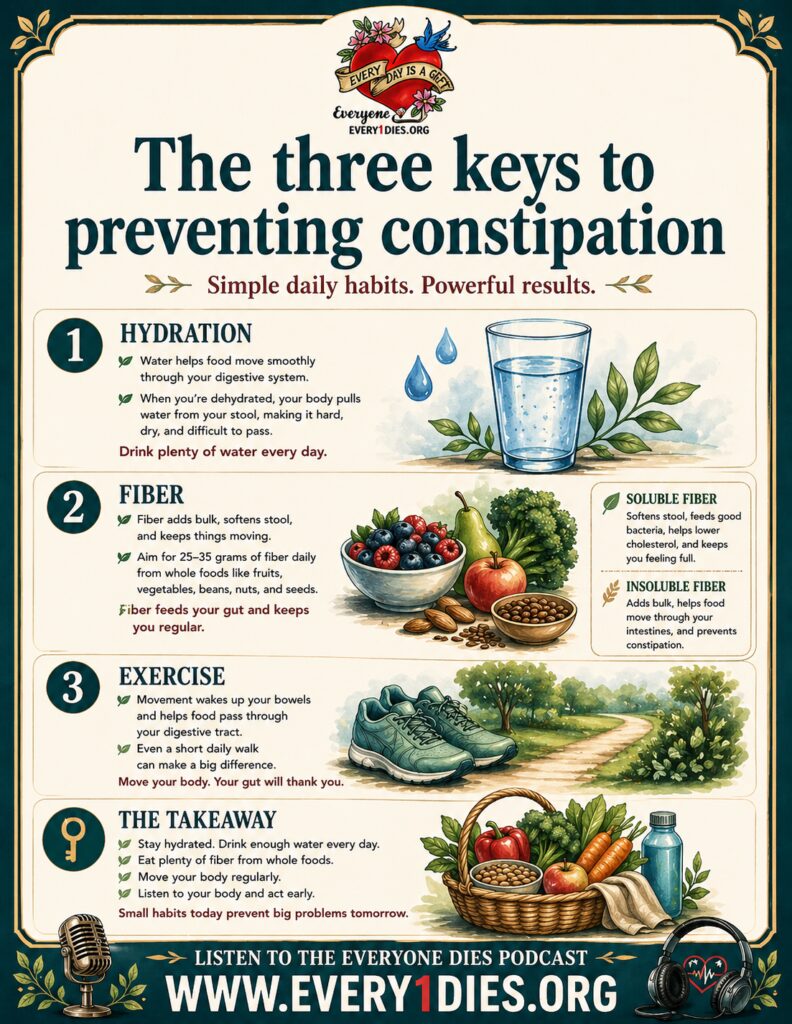
To keep your system functioning properly, focus on these three core areas:
1. Fiber (The Right Balance)
Nutrition experts generally recommend consuming between 25 and 35 grams of fiber daily. Both types play critical roles:
- Soluble Fiber: Absorbs water and forms a gel-like substance that softens stools and supports gut health.
- Insoluble Fiber: Adds bulk to the stool and helps move waste through the intestines more efficiently.
2. Hydration
Hydration is just as important as fiber. When you are dehydrated, your body absorbs extra water from your digestive tract, leading to hard stools.
Critical Note: Increasing fiber without drinking adequate water can actually worsen constipation. This is particularly dangerous if you use fiber supplements like psyllium husk; without enough water, these supplements can cause an obstruction rather than prevent one.
3. Physical Movement
Physical activity stimulates intestinal motility, helping food and waste move through the digestive tract efficiently. A lack of activity slows this process down, but even moderate increases in daily movement can make a meaningful difference.
Post-Surgery Risks: Adhesions and Obstructions
For individuals who have had abdominal surgery, managing constipation carries much higher stakes.

- What are adhesions? After surgery, scar tissue called adhesions can form between organs and tissues.
- The Risk of Obstruction: These adhesions can physically interfere with the movement of stool, causing it to become entirely blocked.
- A Serious Complication: A bowel obstruction is a serious, potentially life-threatening condition that frequently requires hospitalization.
Because of this risk, maintaining a consistent bowel routine is critical after surgery or during chronic illness. Your daily regimen should focus on staying hydrated, consuming adequate fiber, and maintaining physical activity as tolerated.
Laxatives and Proper Positioning
Stool Softeners vs. Stimulants
While temporary aids can provide relief, they must be used with care under medical guidance:
- Short-term use: Stool softeners and laxatives can be incredibly helpful for immediate relief.
- The risk of overuse: Overusing stimulant laxatives can lead to bowel dependence, meaning your intestines become less capable of functioning naturally without assistance.
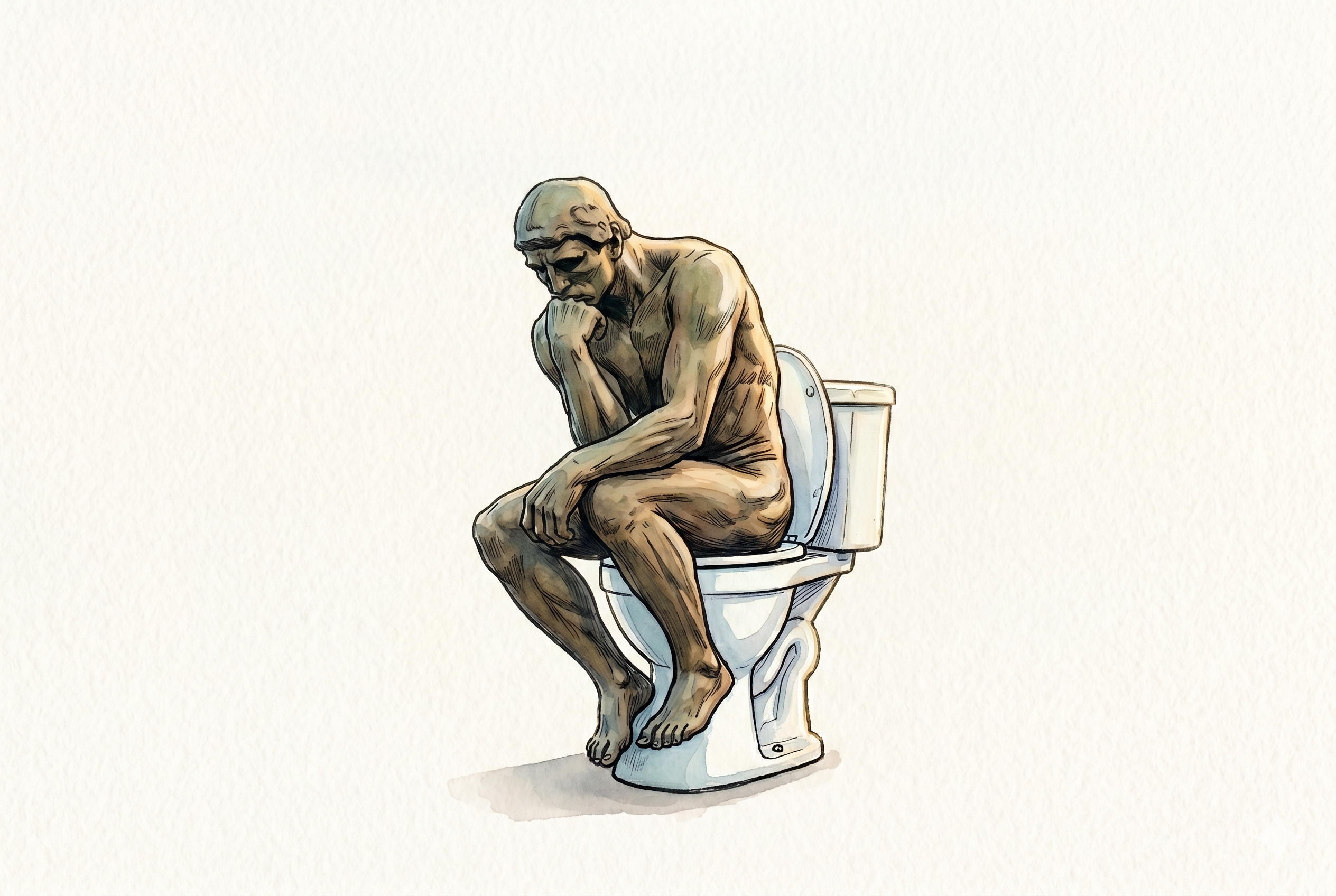
“Thinker” on the Throne: Why Posture Matters
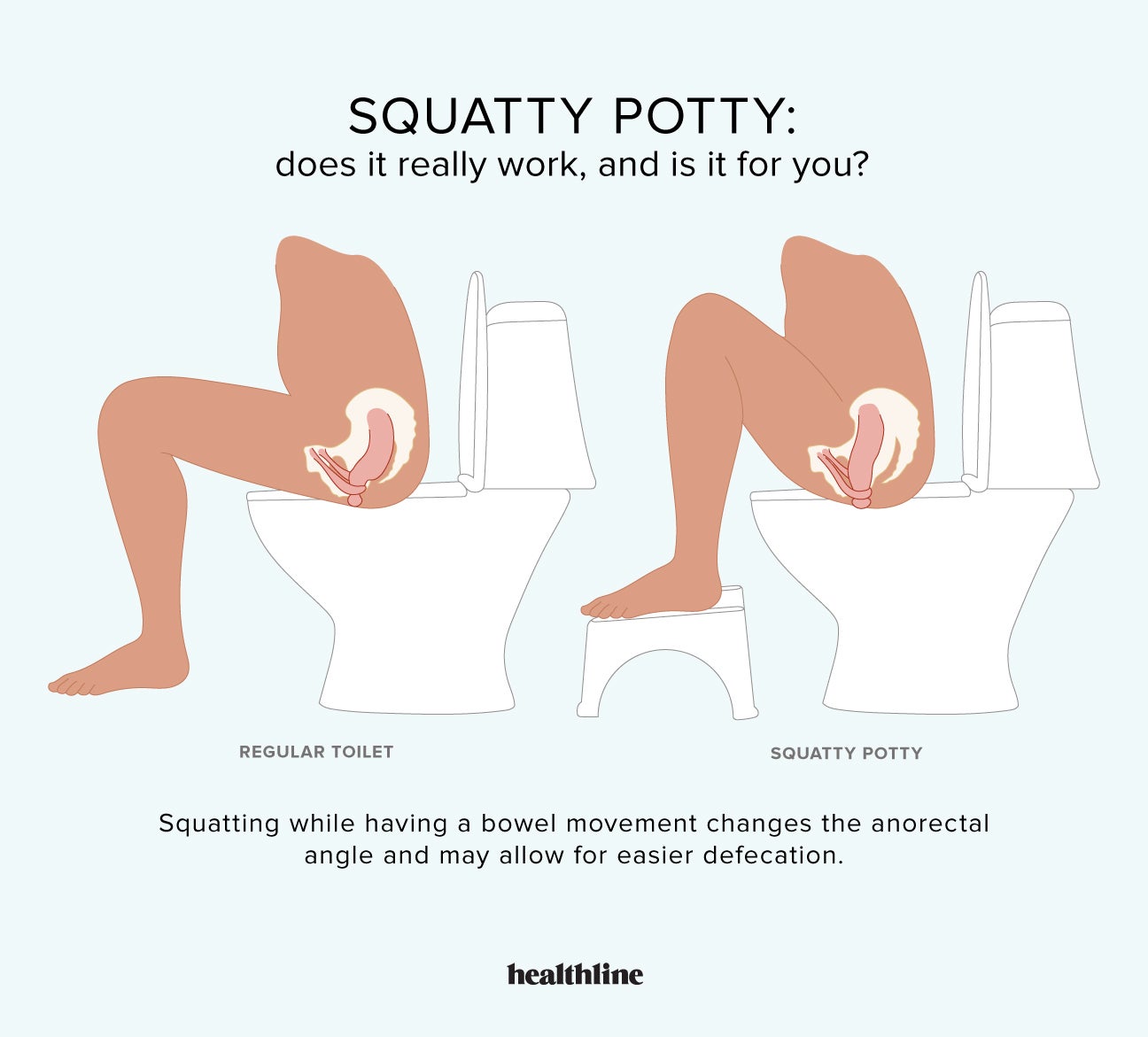
Even body positioning can affect how easily you pass stool. Traditional upright sitting (a 90-degree angle) can constrict the muscles around the rectum, making elimination difficult. To make elimination easier, adopt a more natural squatting posture:
- Lean forward slightly.
- Elevate your knees above your hips (using a footstool or yoga blocks).
- This mimics the classic pose of Rodin’s The Thinker, which naturally straightens the bowel and allows waste to pass smoothly.

Final Takeaway
Constipation is not just an uncomfortable inconvenience—it is a physiological signal. It reflects how your daily habits are supporting or interfering with your body’s basic biological processes. Paying attention to your habits, making small adjustments, and recognizing when a pattern isn’t normal can prevent serious, long-term health crises.
Related Episodes:
- S5E24: What is the Gut Microbiome, and Why Is it Important?
- S5E25: The Important Role of the Microbiome to Your Health and Immune Function
- S5E26: Food as Medicine- How to Improve Health through the Right Diet
- S5E16: Colorectal Cancer is Increasing in the Young: What You Need to Know
- S4E26: Understanding How Breakthrough Cancer Pain is Managed (pain medications are a common cause of constipation)
References:
- RECIPE: How to Make Spicy Deviled Walnuts – Best Spicy Deviled Walnuts Recipe
- 16 Dietitian-Approved Foods That Can Relieve Constipation Fast
- Citizen Grain | Bentley Historical Library
- W.K. Kellogg: From berated brother to breakfast boss
- The Constipation Conversation: Developing a Management Plan With Your Patients
- Lai, S., Zhu, C., Zhou, X., Zeng, Q., Huang, L., Cao, X., Zhou, Q., Zhong, Y., Huang, J., Liu, J., Zeng, G., & Chen, H. (2024). Effect of Physical Activity on the Association Between Diet and Constipation: Evidence From the National Health and Nutrition Examination Survey 2007-2010. Journal of neurogastroenterology and motility, 30(3), 322–331. https://doi.org/10.5056/jnm23134
- How Much Fiber in Psyllium Husk? Expert Wellness Guide 2025
Resources:
- Constipation | Johns Hopkins Medicine
- Adhesions – Causes, Symptoms, Treatments
- You’ve Been Pooping All Wrong | Dr. Trisha Pasricha
- Bowl Adhesions – NLM Stat Pearls Continuing Education
- Bowel Obstruction and Cancer Treatment – National Cancer Institute