

Every meal is more than just fuel for your body—it’s also a meal for the trillions of microorganisms living in your gut! In this episode, we look at how fiber-rich whole foods and resistant starch support a thriving gut microbiome, while ultra-processed foods can leave beneficial bacteria struggling.
You will learn the science behind host-diet-gut microbiome interactions, short-chain fatty acids, and simple food swaps you can make to support your immune system, metabolism, and overall health. Stick around for a special re-release bonus segment with even more details on the microbiome!
Topics discussed include:
- What the gut microbiome does and why it matters
- Why fiber is essential for gut health
- What resistant starch is and where to find it
- How ultra-processed foods affect beneficial gut bacteria
- Simple, daily dietary changes that promote long-term wellness
Does the gut microbiome affect immunity and other aspects of health?
You’ll be surprised how vital our tiny allies are, and how our diet affects their function. The S5E25 re-release is all about the gut microbiome and how important it is to our immunity. Here are the timestamps for the whole podcast:
00:00:00 – How to Eat to Nurture Your Gut Microbiome
00:04:11 – S5E25 rebroadcast – The Microbiome’s Importance for Immunity
00:05:45 – Is there a Reason to Chose a Nonprofit Hospice?
00:15:36 – Ways to Die in the Future: Hacked Self-Driving Cars
00:19:34 – Recipe of the Week – Strawberry Oatmeal Bars
00:20:54 – The Gut Microbiome and Immunity
00:37:45 – An Anti-Inflammatory Diet
00:40:58 – Outro
Feed Your Gut: Why Fiber Is Important for Your Microbiome
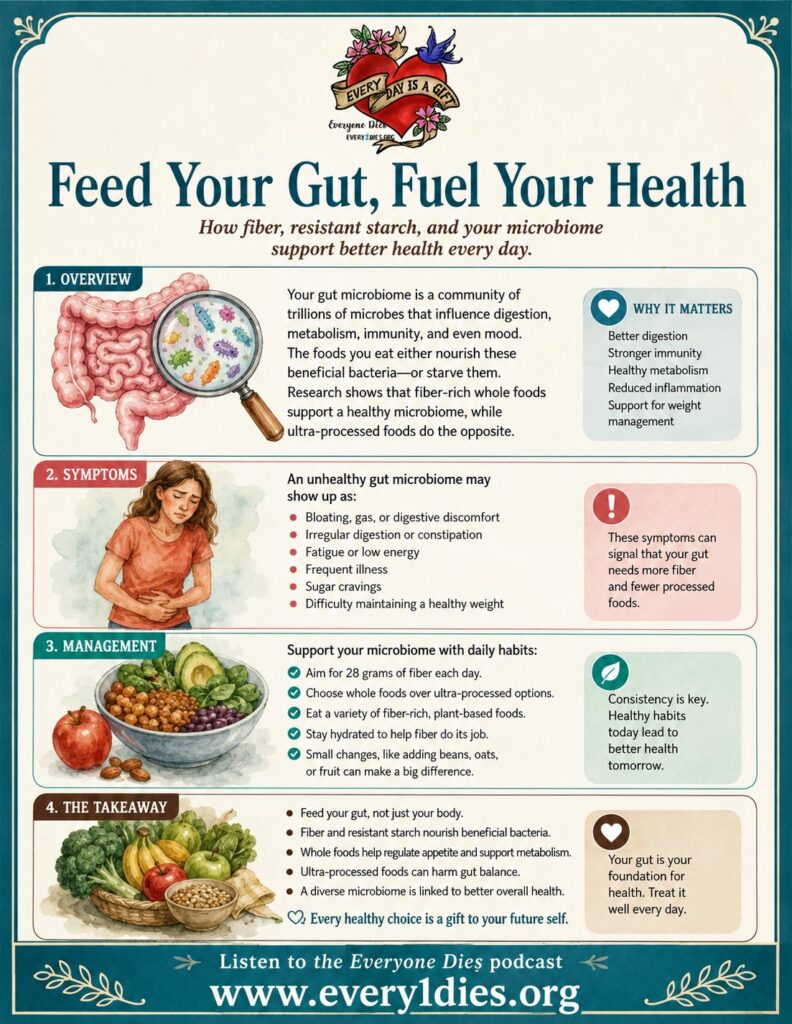
Most of us think about food as something that fuels our own bodies. However, every meal also feeds the trillions of microorganisms that live in our digestive tract. Together, these bacteria, viruses, fungi, and other microbes make up the gut microbiome, an ecosystem that plays an important role in digestion, metabolism, immune function, and overall health.
Scientists continue to discover that the relationship between people and their gut microbiome is remarkably complex. A healthy microbiome helps digest certain foods that our own bodies cannot fully break down, produce vitamins, communicates with the immune system, and creates compounds that benefit many organs throughout the body.
Why Fiber Matters
Fiber is a type of carbohydrate that cannot be completely digested in the stomach or small intestine. Instead, it travels to the large intestine, where it becomes food for beneficial gut bacteria. As these bacteria digest fiber through fermentation, they produce compounds known as short-chain fatty acids. These substances help maintain the health of the intestinal lining, support normal metabolism, reduce inflammation, and contribute to healthy immune function. Research also suggests that diets rich in fiber may help people feel full longer, support healthy weight management, and reduce the risk of several chronic diseases.
Whole Foods Versus Ultra-Processed Foods
Not all calories have the same effect on the body. Ultra-processed foods are often digested and absorbed quickly in the upper digestive tract. Because they are absorbed so early, relatively little reaches the large intestine, where the microbiome resides. This means that while the body receives calories, the beneficial microbes receive much less nourishment.
Foods that naturally contain fiber make the full journey through the digestive system before reaching the large intestine. There, they provide fuel for beneficial bacteria, allowing these organisms to thrive. Emerging research suggests this difference may influence metabolism, appetite regulation, and overall health.
What Is Resistant Starch?
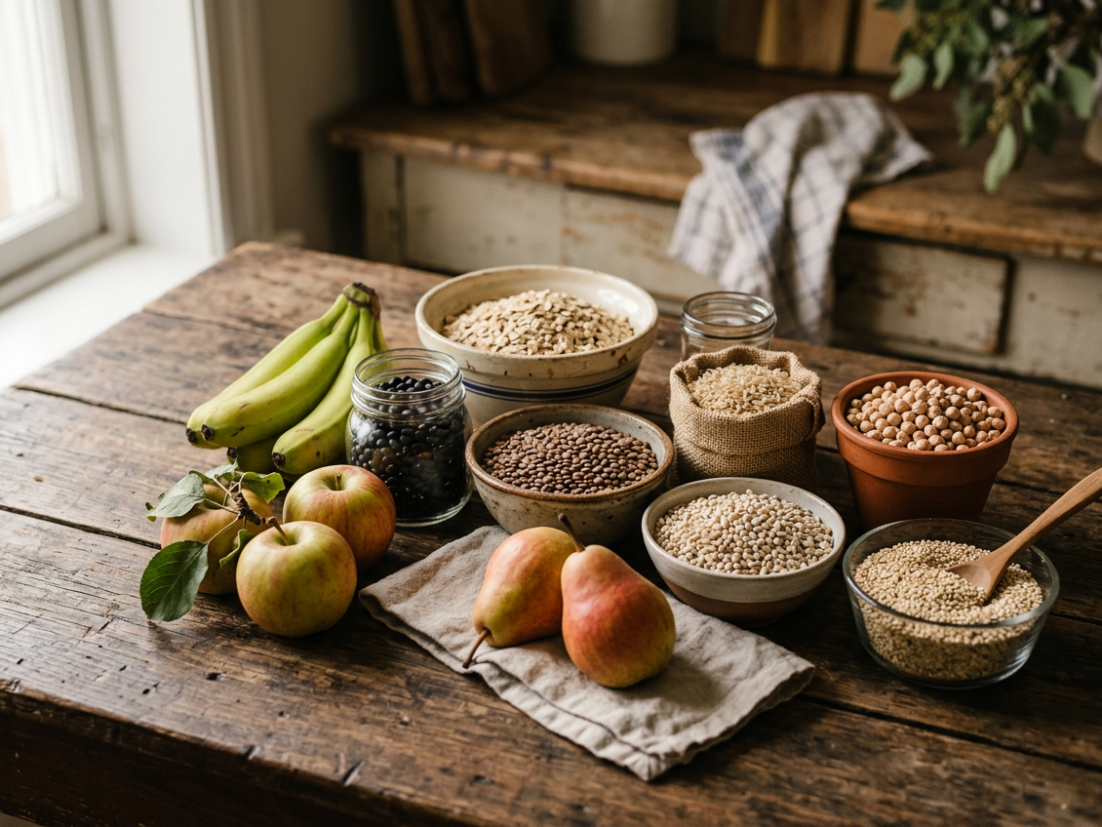
One particularly beneficial type of fiber is resistant starch. As its name suggests, resistant starch resists digestion in the small intestine and reaches the colon intact, where it becomes food for beneficial bacteria. Foods naturally rich in resistant starch include:
- Oats
- Beans
- Lentils
- Chickpeas
- Brown rice
- Barley
- Quinoa
- Green bananas
- Apples
- Pears
- Peas
- Other whole grains
Eating a variety of these foods provides your microbiome with the nutrients it needs while also supplying vitamins, minerals, and plant compounds that support overall health.
Small Changes Make a Difference
Improving your gut health does not require an extreme diet. Small, sustainable changes often have the greatest long-term impact. You might start by choosing oatmeal for breakfast, adding beans to soups or salads, replacing refined grains with whole grains, or including fruit with meals or snacks. Gradually increasing fiber intake while drinking adequate water can help your digestive system adjust comfortably. Current dietary recommendations suggest most adults consume approximately 28 grams of fiber each day, although individual needs vary depending on age and sex.
Take care of your microbiome, and it will take care of you!
The Bottom Line
- Your gut microbiome is an active partner in your health. Every meal influences this community of microorganisms, either supporting its diversity or limiting its ability to function effectively.
- Choosing more fiber-rich whole foods and fewer ultra-processed foods benefits not only your digestive system but also your metabolism, immune function, and overall well-being.
- Healthy habits are built one meal at a time. Every opportunity to feed your microbiome is also an opportunity to invest in your long-term health.
- For more evidence-based health education and conversations about living well, visit www.every1dies.org or listen to the Everyone Dies podcast wherever you get your podcasts.
Related Episodes:
- S5E25: The Important Role of the Microbiome to Your Health and Immune Function
- S5E4: Inflammation: What it is, How It Causes Disease, and How You Can Decrease It
- S7E11: Constipation: Types, Causes, Risks, and What You Can do to Prevent It
- S6E47: The New Face of Colorectal Cancer: Celebrity Legacies, the Screening Gap and How to Advocate for Yourself
References:
- The best — and worst — foods for your gut microbiome – The Washington Post
- All calories are not created equal when it comes to weight loss – The Washington Post
- Corbin, K.D., Carnero, E.A., Dirks, B. et al., Host-diet-gut microbiome interactions influence human energy balance: a randomized clinical trial. Nat Commun14, 3161 (2023). https://doi.org/10.1038/s41467-023-38778-x
Resources:
- Human Microbiome and Normal Flora of The Human Body
- Your Gut Microbiome: The Most Important Organ You’ve Never Heard Of (TED Talk)

Use the Feedspot RSS reader to find more.

Everyone Dies: and yes, it is normal!

Everyone Dies (and yes, it is normal) is a story about a young boy named Jax who finds something special on the beach where he and his grandpa Pops are enjoying a wonderful day. Pops helps Jax understand that death is a normal part of life. This book provides an age appropriate, non-scary, comfortable way to introduce the important topic of mortality to a preschool child. Its simple explanation will last a lifetime. Autographed copies for sale at: www.everyonediesthebook.com. Also available at Amazon
Mourning Jewelry

We offer a way to memorialize your loved one or treasured pet with a piece of handmade jewelry. When people comment on it and the wearer can say for example “I received this when my mother died” which opens the conversation about this loss. All our jewelry is made with semi-precious stones and beads, vintage beads, and pearls. You can choose between earrings or bracelets and the color family. Learn More