
Exploring Affinity Death Cafes, Cultural Safety, and Practical Tools for Processing Loss
When books are too long for a grief-fogged brain, therapists lack specialized experience, and traditional support groups fail, how do you process profound loss? Discover how Saundra Neperud built The Grief App and why affinity Death Cafes are transforming community bereavement care.
Key Takeaways
- Overcoming “Grief Fog”: Learn why traditional long-form books and generic advice fail during acute grief, and how bite-sized processing tools provide accessible relief.
- The Power of Affinity Spaces: Discover why specialized community salons and Death Cafes for Black, brown, and LGBTQ+ communities foster essential safety, cultural understanding, and open conversations about mortality.
- Creating What You Need: Understand how lived loss can inspire accessible tools that shift the focus from “fixing” grief to simply providing space to process it.
Timestamps:
- 00:00 Introduction: Death as a Motivator for Community Change
- 02:27 Recipe of the Week: Caramelized Figs with Goat Cheese
- 03:21 Cultural Safety & Belonging: The Rise of Affinity Death Cafes
- 08:36 Saundra Neperud’s Story: Advanced Colon Cancer, Caregiver Trauma, and Loss
- 16:22 The Birth of The Grief App: Addressing “Bereavement Care Deserts”
- 34:57 “Am I Grieving Wrong?” Finding Connection, Healing, and What’s Next
- 50:27 Outro & Resources for Living Well
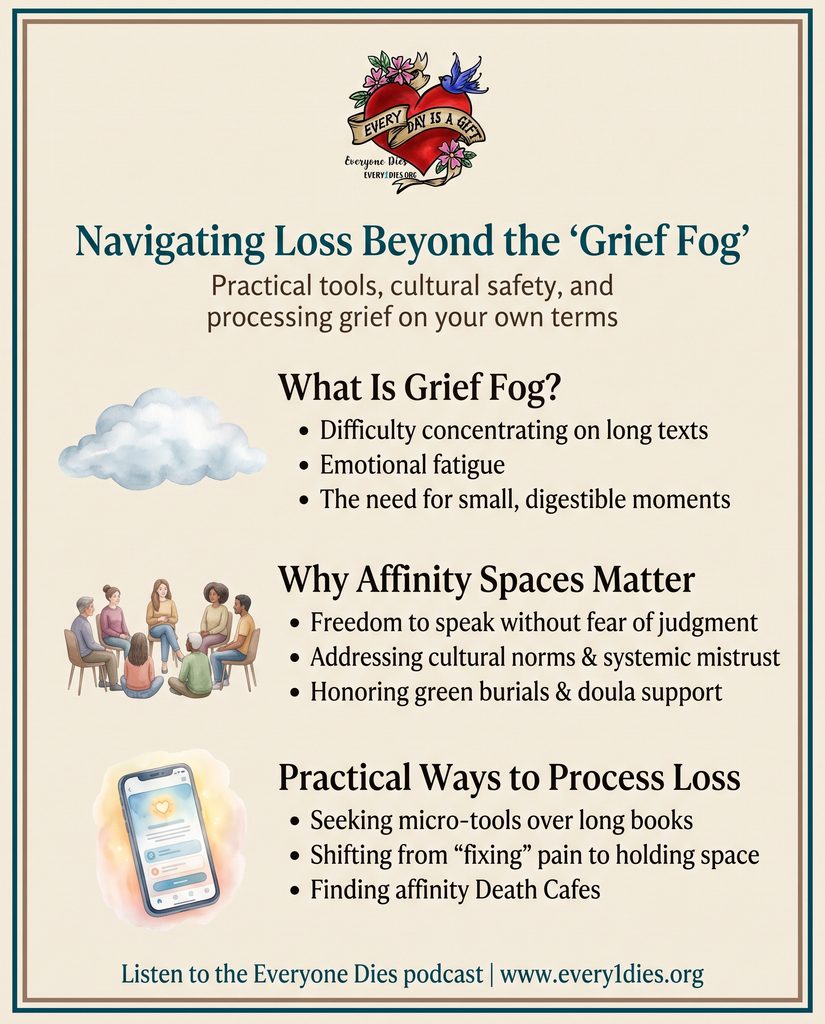
Grief Fog, Community Salons, and The Grief App: Building What You Need When Nothing Works
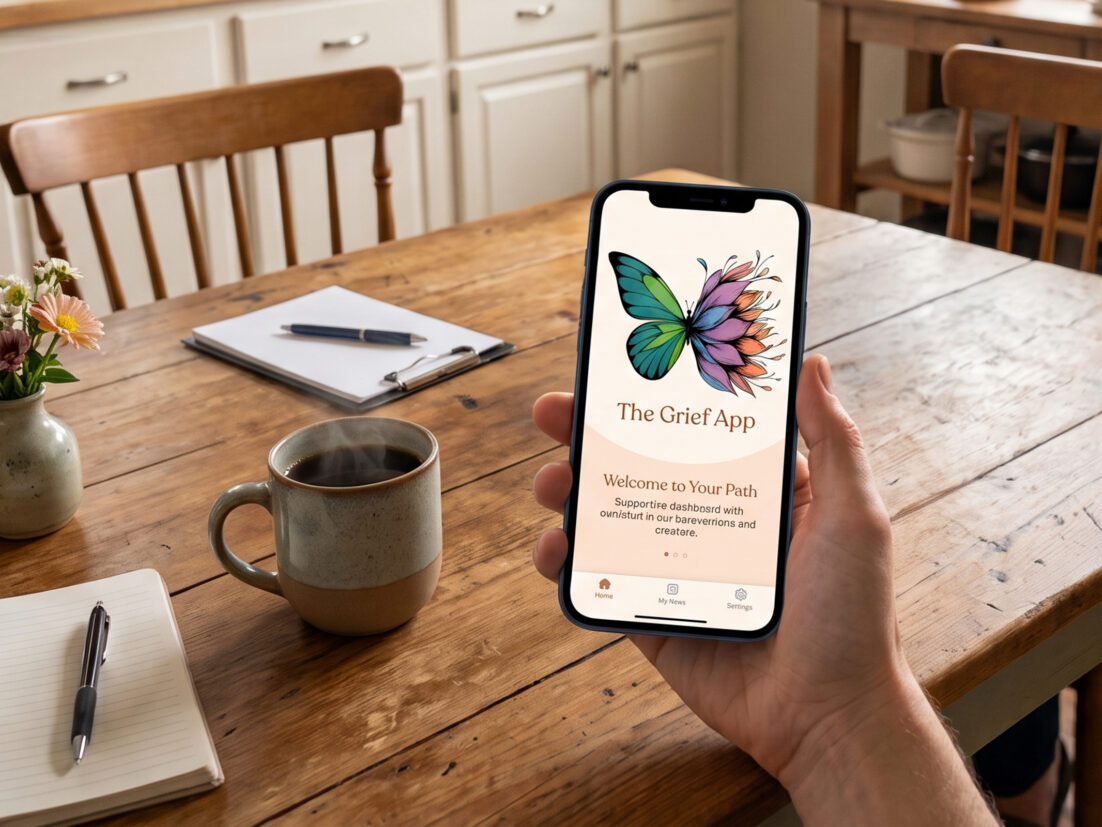
In this episode, we interview Saundra Neperud the founder of The Grief App. After her husband’s death she looked for resources to help her on her grief path. Except the books were too long for her grief-fogged brain. Her therapist had no grief experience. There wasn’t a single support group that worked for her. So, she built the thing she needed. It started as just an idea and became something bigger when other people kept saying the exact thing she’d been feeling: “I don’t need to be fixed. I just need somewhere to process this.”
“I don’t need to be fixed. I just need somewhere to process this.”
Saundra Neperud, founder of The Grief App
The Brain in Acute Grief: Why Long Books and Complex Advice Fail
When grief strikes, the brain often enters a thick “grief fog” where reading long books feels impossible, generic therapy falls short, and standard support groups don’t fit. In this episode, we explore how devastating loss can become a catalyst for creating tools that serve entire communities.
Building What You Need: How Saundra Neperud Created The Grief App
As our guest this week, Saundra Neperud shares her personal grief journey and why she built a tool centered on processing rather than “fixing” grief.
You can find more information and download the app at The Grief App website, the App Store, or Google Play.
Cultural Safety and Belonging: The Rise of Affinity Death Cafes
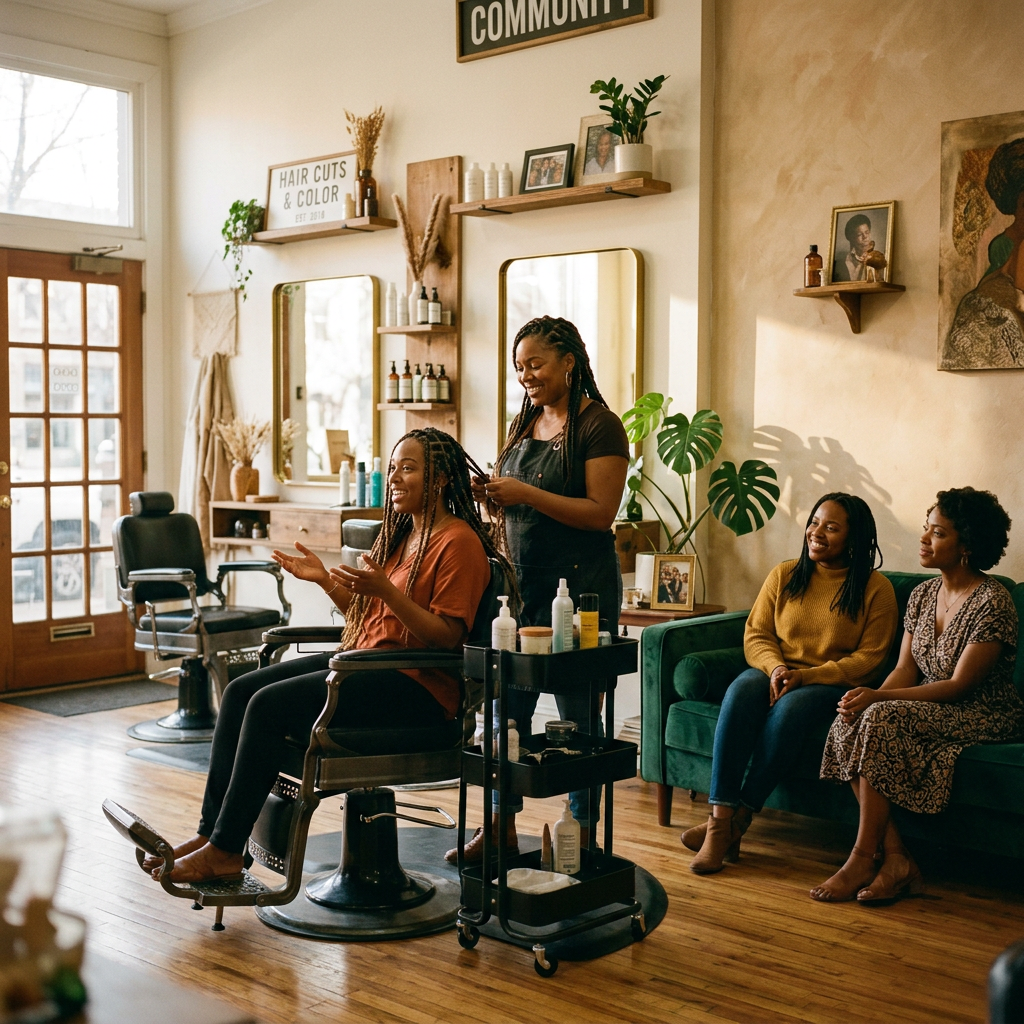
Creating Spaces for Black, Brown, and LGBTQ+ Bereavement
Charlie shared a story on the rise of affinity death cafes, spaces where Black, brown, and LGBTQ+ communities safely discuss mortality, cultural norms, and end-of-life choices without fear. These spaces highlight the distinct experiences, systemic barriers, and cultural traditions of Black and Indigenous individuals within the broader spectrum of people of color. Learn how specialized death salons address barriers, historical healthcare mistrust and green burials.
| Traditional Grief Options | Modern Adaptive Grief Resources |
|---|---|
| Long-form books and reading materials requiring high cognitive focus | Bite-sized digital tools like The Grief App for “grief fog” |
| Broad, general support groups with mixed dynamics | Affinity salons and death cafes centered on cultural and identity safety |
| Standard therapy lacking specialized grief training | Specialized death doula support and grief-informed practitioners |
| Prescriptive advice focused on “moving on” or “fixing” pain | Open, non-judgmental spaces focused purely on processing loss |
| One-size-fits-all end-of-life planning approaches | Personalized, eco-friendly choices like green burials and tailored care |
Related Content:
- Coping Forward: Mental Health Strategies After Major Loss
- S4E6: The Way Forward after a Spouse Dies
- S7E22: “What Y’all Gon’ Do With Me?” Bridging Culture, Faith, and Advance Care Planning
- S3E30: Join the Ecosystem with Natural Composting after Death
- S3E09: Celebrating Life as a Community with a Jazz Funeral
- S6E47: The New Face of Colorectal Cancer: Celebrity Legacies, the Screening Gap and How to Advocate for Yourself
References:
- Recipe of the Week: Figs with Goat Cheese
- The women running death salons for people of color to process grief: ‘It allows for freedom’ (The Guardian)
- Saundra Neperud, Founder, The Grief App
Saundra@TheGriefApp.com | TheGriefApp.com
Resources:

Use the Feedspot RSS reader to find more.

Everyone Dies: and yes, it is normal!
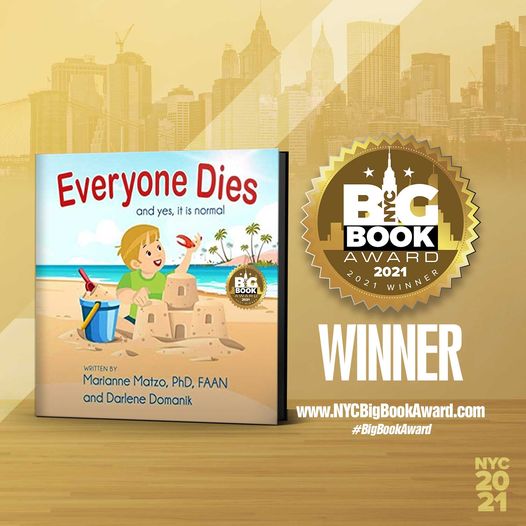
Everyone Dies (and yes, it is normal) is a story about a young boy named Jax who finds something special on the beach where he and his grandpa Pops are enjoying a wonderful day. Pops helps Jax understand that death is a normal part of life. This book provides an age appropriate, non-scary, comfortable way to introduce the important topic of mortality to a preschool child. Its simple explanation will last a lifetime. Autographed copies for sale at: www.everyonediesthebook.com. Also available at Amazon
Mourning Jewelry
We offer a way to memorialize your loved one or treasured pet with a piece of handmade jewelry. When people comment on it and the wearer can say for example “I received this when my mother died” which opens the conversation about this loss. All our jewelry is made with semi-precious stones and beads, vintage beads, and pearls. You can choose between earrings or bracelets and the color family. Learn More