
What can a 1600s Dutch painting featuring a skull, a fading flower, and a ticking clock teach us about our daily choices? In this episode we explore the art genre of vanitas and the powerful concept of memento mori—the intentional reminder that our time on earth is finite.
We break down the meaning behind these symbols and why they still matter today. Rather than inspiring fear, these classical masterpieces were designed to offer clarity. By placing beauty, wealth, and pleasure directly alongside mortality, vanitas art challenges us to stop delaying conversations, focus on what truly matters, and live with intention.
Transcript
Timestamps:
- 00:00 – The Hidden Message in Vanitas Art: Decoding Memento Mori
- 03:17 – Recipe of the Week: Judy Garland’s Homemade French Dressing and Vegetable Salad
- 04:20 – Over the Rainbow: The Complex Life and Legacy of Judy Garland
- 08:37 – What Dutch Vanitas Art Teaches Us About Mortality
- 10:40 – Symbolism in Vanitas: Skulls, Musical Instruments, & Memento Mori
- 14:07 – Timepieces, Skull Watches, and Tempus Fugit – “Time Flies”
- 18:42 – “Even Before They Are Gone” Poem by Sarah Hall Gueldner
- 19:16 – Closing Thoughts & Last Words of the Wicked Witch of the West
What Vanitas Art Knows About Death
A Celebration with a Hidden Warning
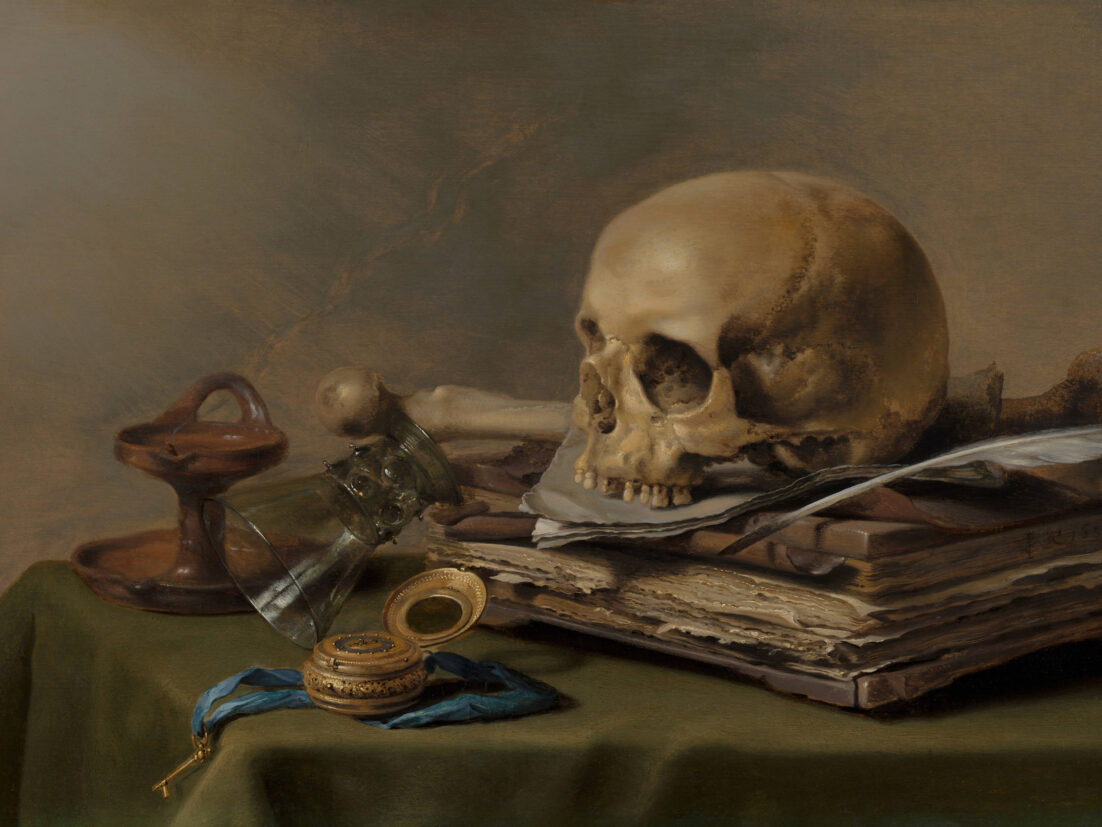
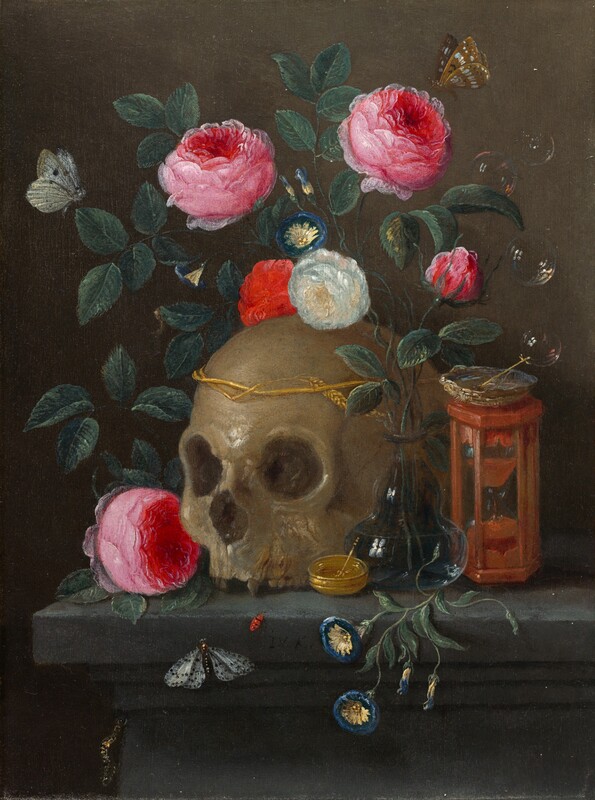
At first glance, it looks like a celebration. Rich fabrics, gleaming instruments, carefully arranged fruit, and books that suggest knowledge and culture all sit in quiet balance. The light is soft. The objects are beautiful. It feels like a moment worth preserving. But then you notice the skull.
A flower is beginning to fade. Fruit has been cut open and will not last. A clock, almost easy to overlook, quietly measures time that cannot be stopped. This is not just a still life. It is a vanitas painting, part of a tradition that was never meant to simply decorate a wall. It was meant to say something uncomfortable, something people in the 1600s understood well and we still struggle to accept today. Which is, everything you value will not last.
Decoding the Symbols: What Is Vanitas Art?
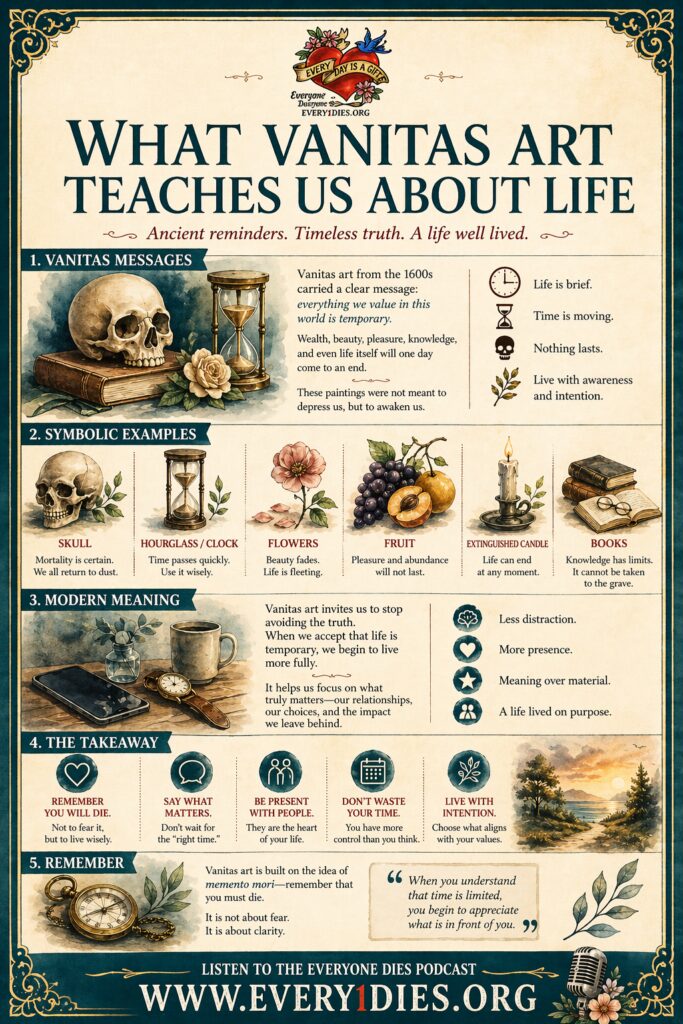
The word vanitas comes from the Latin phrase “vanity of vanities, all is vanity,” a reminder that worldly things, wealth, beauty, pleasure, knowledge, are temporary. These paintings were intentionally constructed to include symbols of mortality. Some were obvious, like skulls or extinguished candles. Others were quieter: a piece of fruit beginning to rot, a flower losing its petals, a tipped glass, or a watch marking the passage of time. Each object carried meaning, and together they formed a clear message. Life is brief. Time is moving. Nothing here is permanent.
Vanity, not in the sense of vainness or conceit, but of the emptiness of earthly possessions underlines the Vanitas still life and is the concept of memento mori, reminding us that we must die.

Why 17th-Century Artists Painted Mortality
These paintings were not created to frighten people. They were meant to focus them. In a world without modern medicine or the illusion of control over death, people were more accustomed to seeing life as finite. Vanitas art functioned as a visual reminder to live with that awareness. It asked viewers to consider how they were spending their time, what they valued, and what would remain when everything else was gone.
The Modern Illusion of Endless Time
We tend to believe we are different now. We live longer. We understand more. We have systems in place that allow us to push conversations about death further away. We can avoid it in ways previous generations could not. But the reality has not changed. The same truths embedded in those paintings still apply. We still accumulate. We still delay difficult conversations. We still assume there will be more time. And there may not be.
Memento Mori: Finding Clarity in the Finite
At the center of vanitas art is the idea of memento mori, which means “remember that you must die.” It is not a statement of despair but rather of clarity. When people truly understand that time is limited, their priorities often shift. They become more intentional. They say the things they have been putting off. They focus less on accumulation and more on connection. They begin to recognize what matters.

Living Fully in the Shadow of the Clock
Vanitas paintings were never asking people to reject life or withdraw from it. They were asking people to see it clearly. To understand that beauty fades, pleasure passes, and knowledge cannot be carried forward beyond death. These are not reasons to disengage from life. They are reasons to engage with it more fully.
There is a kind of freedom in that recognition. When you stop expecting permanence, you begin to appreciate what is in front of you. When you stop assuming time is unlimited, you begin to use it differently. When you accept that life ends, you start to live in a way that reflects that truth.
You do not need a painting to tell you this. But the message remains the same. Your time is finite. Your life is temporary. And that is exactly why it matters.
Recipe of the Week:
References:
- Even Before They Are Gone by Sarah Hall Gueldner. Wild Onions, published annually by the Department of Humanities, Penn State University College of Medicine.
- Judy Garland, 47, Star of Stage and Screen, Is Found Dead in Her London Home
- Vanitas Still-Life with Musical Instruments https://www.wga.hu/html_m/h/heem/cornelis/vanitas.html
Resources:

https://blog.feedspot.com/palliative_care_podcasts/

Everyone Dies: and yes, it is normal!
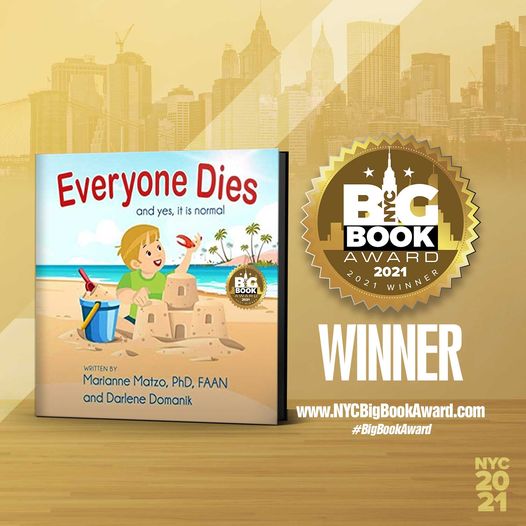
Everyone Dies (and yes, it is normal) is a story about a young boy named Jax who finds something special on the beach where he and his grandpa Pops are enjoying a wonderful day. Pops helps Jax understand that death is a normal part of life. This book provides an age appropriate, non-scary, comfortable way to introduce the important topic of mortality to a preschool child. Its simple explanation will last a lifetime. Autographed copies for sale at: www.everyonediesthebook.com. Also available at Amazon
Mourning Jewelry
We offer a way to memorialize your loved one or treasured pet with a piece of handmade jewelry. When people comment on it and the wearer can say for example “I received this when my mother died” which opens the conversation about this loss. All our jewelry is made with semi-precious stones and beads, vintage beads, and pearls. You can choose between earrings or bracelets and the color family. Learn More