
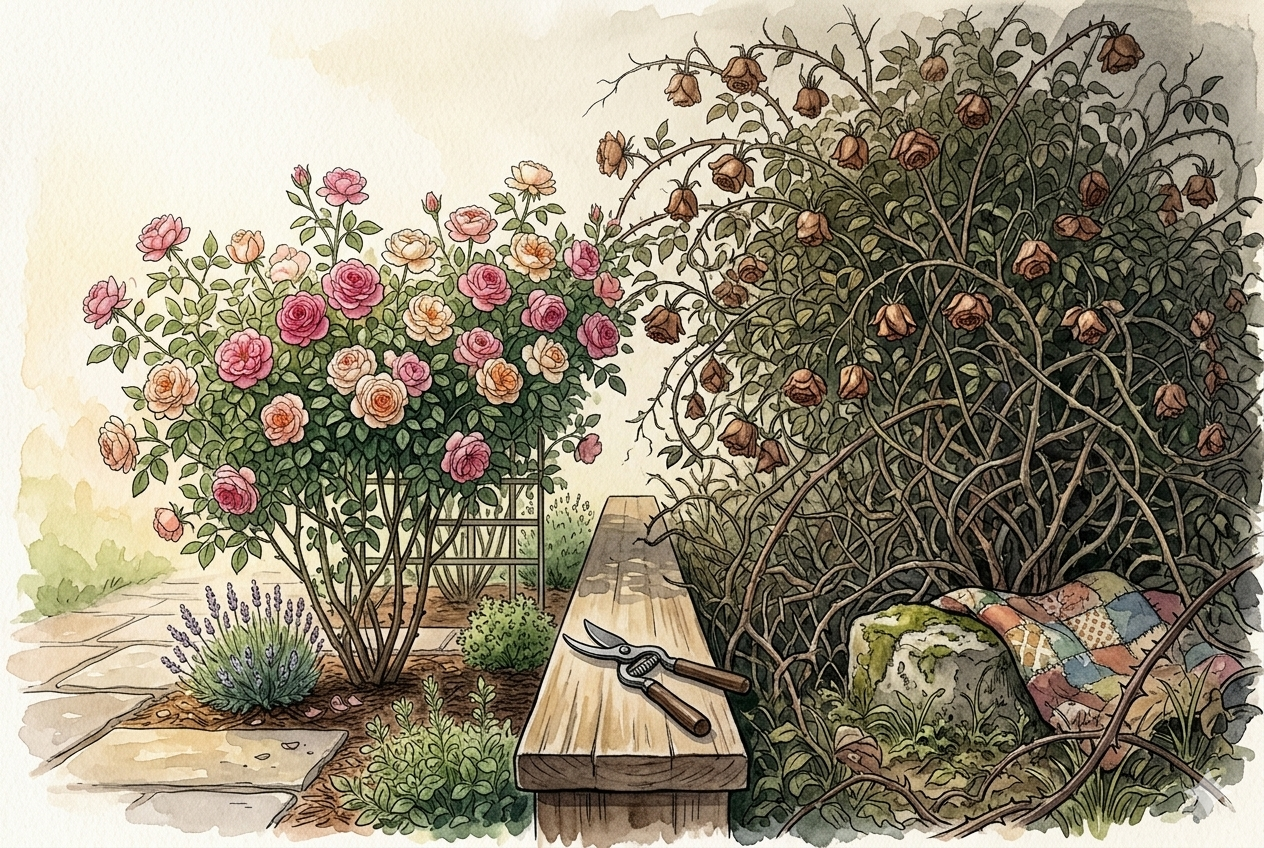
Learn why setting limits prevents burnout and actually leads to better care.
You’ve probably heard people talk about “boundaries.” But what does that mean?
Boundaries are not about controlling other people. They are about defining what is acceptable to you, physically, emotionally, and mentally—and protecting your ability to function in the world without being overwhelmed or diminished.
In this episode, we break down what personal boundaries are, the different types of boundaries people need, and why so many of us struggle to set them. From physical space and emotional protection to time, work and relationships, boundaries shape how we live and how we are treated.
If you feel drained, overextended, burned out, or taken for granted, this is not about fixing other people. It is about understanding where your lines are—and learning how to hold them.
Timestamps:
Transcript
00:00 – Intro: Remembering Fathers and Boundaries in Caregiving
01:51 – Recipe of the Week: Dad’s Pineapple Salsa
02:14 – A Father and Boundaries – An Essay by Nick Dothée (Washington Post)
08:42 – “Personal Boundaries” – What does that mean?
13:21 – Why Boundaries are Important in Caregiving
14:44 – Charlie’s Stoic Aging Father – How His Family Set Boundaries with Love
19:33 – Cold Chicken and Last Breaths – Remembering and Grieving a Father
22:27 – Outro
What are “Personal Boundaries”?
You hear the word “boundaries” often, but it is not always clear what people mean by it. Boundaries are not rules for other people. They are the lines we draw for ourselves that define what we are comfortable with and what we are not. They shape how we allow others to interact with us and how we protect our own well-being.
At their core, boundaries are about clarity. They answer questions we do not always ask out loud. What feels acceptable to me? What crosses a line? What do I need to feel safe, respected, and able to function well in my daily life? Without boundaries, those questions go unanswered, and the result is often frustration, resentment, and exhaustion.
Boundaries show up in very practical ways. They may involve physical contact, such as not feeling comfortable hugging someone you have just met. They may involve verbal interactions, such as not accepting being spoken to in a dismissive or disrespectful way. They can also involve personal space, such as choosing not to have others in your home when you are not there. These are not arbitrary preferences. They are expressions of what you need to feel secure and respected.
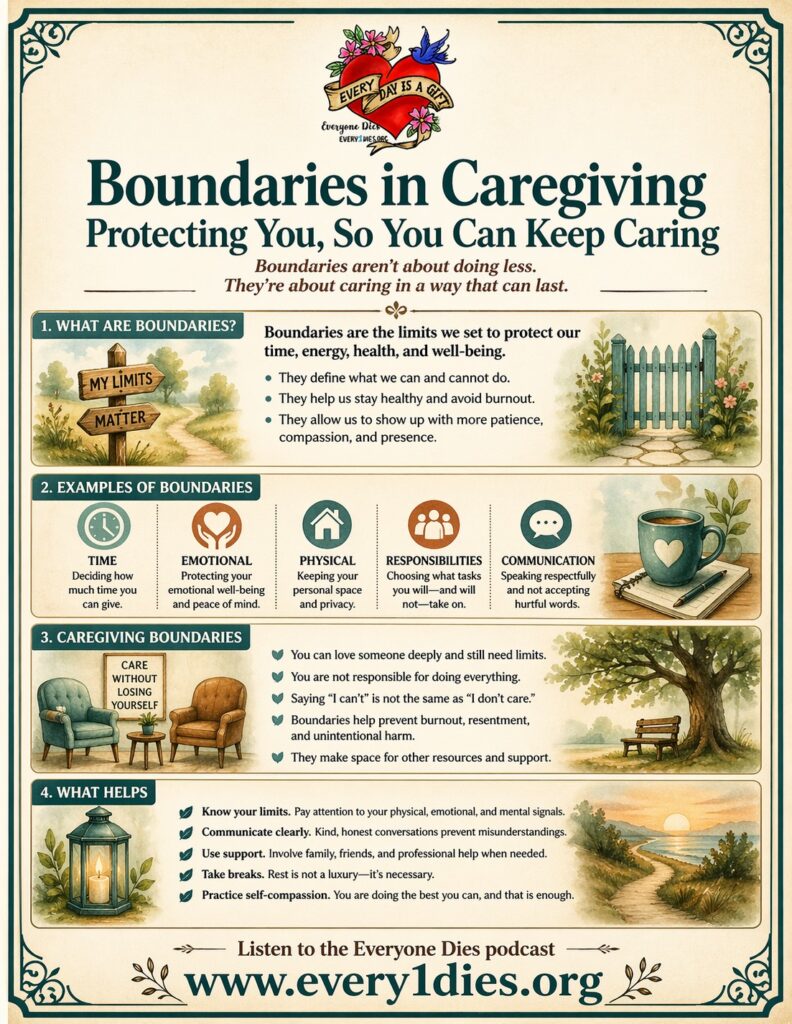
There are several types of boundaries, and most people need a combination of all of them.
Emotional boundaries protect your internal world. They allow you to decide what you take in and what you do not, especially when it comes to other people’s moods, expectations, or demands. Physical boundaries protect your body and your space. Sexual boundaries protect your safety and autonomy in intimate situations. Workplace boundaries help you maintain focus and prevent unnecessary stress or conflict from interfering with your ability to do your job. Material boundaries protect your belongings, and time boundaries protect one of your most limited resources: your time.
Time boundaries are often overlooked. Many people feel pressure to say yes, to be available, or to meet expectations that are not realistic or sustainable. Over time, this leads to feeling stretched too thin. When you do not protect your time, you lose the ability to choose how your life is spent. That loss is not always dramatic, but it is significant.
One of the reasons people struggle with boundaries is that they are often misunderstood. Setting a boundary can feel like being difficult, selfish, or unkind. The opposite is often true. Clear boundaries reduce confusion and resentment. They allow relationships to function more honestly because expectations are known rather than assumed.
It is also important to understand that boundaries are not about controlling other people. You cannot make someone behave differently. What you can do is decide what you will accept and what you will do if that line is crossed. That is where boundaries become real, not in what you say, but in what you are willing to follow through on.
When boundaries are absent, the cost is cumulative. You may feel drained, overlooked, or taken for granted. You may find yourself saying yes when you mean no or staying silent when something matters. Over time, this disconnect between what you feel and what you allow can lead to burnout and disconnection from your own needs.
Boundaries are not about building walls. They are about creating structure. They allow you to engage with others in a way that is sustainable and respectful to both sides. When your boundaries are clear, you are more present, more focused, and more able to participate fully in your life.
In the context of a finite life, boundaries take on even more importance. Time is limited. Energy is limited. Attention is limited. When you understand that, boundaries stop feeling optional. They become essential.
You do not need to control everything around you. But you do need to decide what you allow into your life.
References
- Opinion | My father saw me at my worst. I’m grateful he lived to see the rest. – The Washington Post
- Recipe of the Week: Pineapple Salsa – Dishes With Dad
- Caregiving For Older Parents: What You Need To Know About Boundaries (www.jenerationshealth.com)
Resources
- Why Personal Boundaries are Important and How to Set Them
- 7 Tips for Setting Work Boundaries for Yourself and with Others
- How to Build Personal Boundaries
- How to Set Boundaries as a Family Caregiver | AARP
Related Podcasts
- S5E6: Mothers and Their Daughters, A Blessing and a Curse Learn the science behind the mother-daughter relationship, why the death of a mother is a life-changing event, and tips to improve communication.
- S4E50: You Can’t Appease an Aggressor; How to Handle Aggressive Situations Are you overwhelmed by aggressive people in your workplace or home? Explore strategies to better navigate situations with someone who has anger issues.
- S6E48: When Adult Children Go No Contact: From Brooklyn Beckham to Yours We explore the rise of family estrangement, “ambiguous loss,” and why witnessing a friend’s pain is more powerful than trying to fix it.

Use the Feedspot RSS reader to find more.

Everyone Dies: and yes, it is normal!

Everyone Dies (and yes, it is normal) is a story about a young boy named Jax who finds something special on the beach where he and his grandpa Pops are enjoying a wonderful day. Pops helps Jax understand that death is a normal part of life. This book provides an age appropriate, non-scary, comfortable way to introduce the important topic of mortality to a preschool child. Its simple explanation will last a lifetime. Autographed copies for sale at: www.everyonediesthebook.com. Also available at Amazon
Mourning Jewelry

We offer a way to memorialize your loved one or treasured pet with a piece of handmade jewelry. When people comment on it and the wearer can say for example “I received this when my mother died” which opens the conversation about this loss. All our jewelry is made with semi-precious stones and beads, vintage beads, and pearls. You can choose between earrings or bracelets and the color family. Learn More