

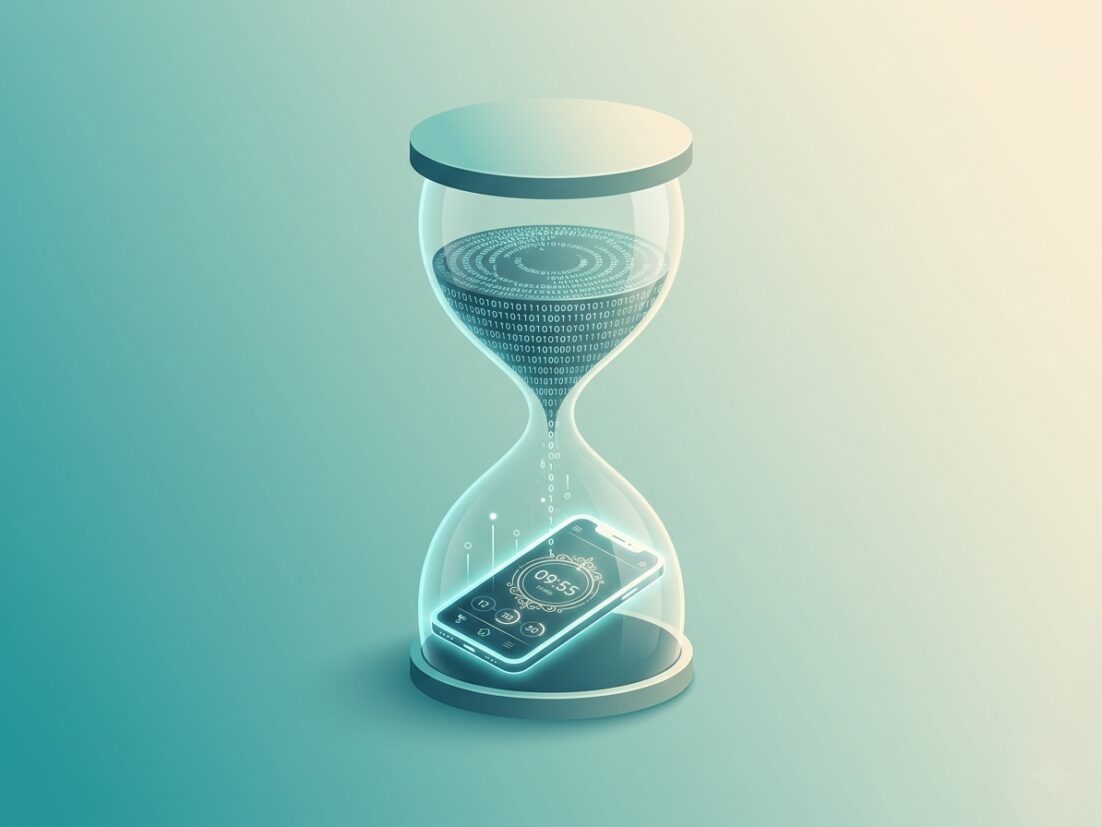
A study of 60,000 people found that just a few minutes of better sleep, a little more movement, and small changes in diet could add years to your life. Not dramatic changes. Small ones.
Now imagine an app that tracks those choices—and tells you, in real time, how they’re affecting the day you’re likely to die. I tried it. It gave me a date. And then, after one good night of sleep, it gave me a different one.
Today, we’re exploring what happens when technology meets mortality—and whether knowing your “death date” changes how you live. This is Everyone Dies. And every day is a gift.
In This Episode:
- 00:00 – Predicting Mortality: Would You Want to Know Your Death Date?
- 03:17 – Ikaria Longevity Recipe: Zucchini-Herb Pie
- 04:02 – The Voice of Pink Floyd: Clare Torry’s “Great Gig in the Sky”
- 09:09 – An App Called Death Clock: Learn How AI Calculates Life Expectancy
- 11:17 – Preventive Health Protocols: Turning Data into Longevity
- 15:21- Can One Night of Sleep Shift Your Death Date? Learn How a 60,000-Person Study Backs Small Changes in Lifespan
- 17:33 – Facing the Countdown: Listener Perspectives on Mortality
- 23:50 – Active Devotion: Lyrics from “The Great Gig in the Sky”
- 25:10: Outro
The App That Predicts Your Death Date — Would You Want to Know?
What if you could open your phone and see the exact day you’re likely to die? Not a vague estimate. Not “sometime in your 80s.” An actual date.
I recently tried an app called the Death Clock, an AI-powered platform that claims to predict your life expectancy, biological age, and even the most likely cause of death based on your health data.
And yes—it gave me a date. October 19, 2044. I put it in my calendar.
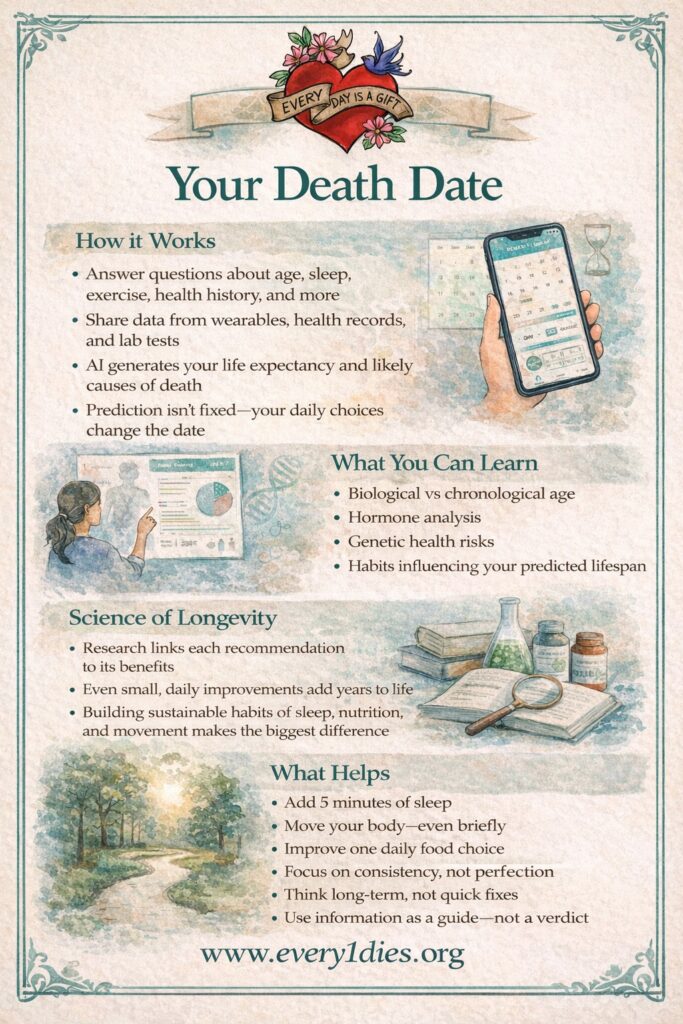
How It Works
The app collects detailed information about your life:
- Age and family history
- Sleep patterns
- Exercise habits
- Social engagement
- Preventive health screenings
- Lab results (or even offers to obtain them)
It can also connect to wearable devices, pulling in real-time data on activity and sleep. From there, it generates a report:
- What you’re doing well
- Where your risks are
- What to change
- The science behind each recommendation
That last part matters. Every suggestion links to supporting research.
The Part That Surprised Me
The date isn’t fixed, the app updates based on our day-to-day choices. The very next day, after better sleep and more activity, my predicted death date moved… a full year later. And that’s where this shifts from novelty to something more meaningful.
It’s not about predicting death. It’s about showing you, in real time, how your daily choices add up.
Motivation… or Anxiety?
Not everyone would want this information. When I told my husband, he said, “Why would you want to know that?” And Charlie didn’t want to hear the date at all. And that’s fair.
For some people, this kind of feedback could feel stressful, or even punishing.
A bad night of sleep, a weekend of poor eating, and suddenly you’ve “lost time.” But the reality is: those choices always mattered. The app just makes it visible.
What Science Says
A large study of 60,000 people published in The Lancet found that small, daily improvements can significantly extend life. The findings are striking: just 5 extra minutes of sleep; about 2 minutes more physical activity; a modest improvement in diet could add an entire year of life
Even more compelling: Optimizing sleep, movement, and nutrition together could add over 9 years of healthier life. Not extreme changes, small ones done consistently.
So What Is This Really About?
- It’s not about the day you die. It’s about the life you’re building.
- We tend to think of longevity as something distant, something fixed, something we can’t control. But the evidence, and even this app, suggest otherwise.
- Every day you are either adding time or quietly subtracting it
Remember, every day is a gift.
Recipe of the Week:
References:
- The Great Gig in the Sky by Pink Floyd Lyrics Meaning – Unveiling the Ethereal Journey Beyond Life: https://www.songmeaningsandfacts.com/the-great-gig-in-the-sky-by-pink-floyd-lyrics-meaning-unveiling-the-ethereal-journey-beyond-life/
- Behind Pink Floyd’s “Great Gig in the Sky” and Why the Vocalist Was Sure It Wouldn’t Make the Cut: https://americansongwriter.com/behind-pink-floyds-great-gig-in-the-sky-and-why-the-vocalist-was-sure-it-wouldnt-make-the-cut/
- How one unknown voice turned Pink Floyd song ‘Great Gig in the Sky’ into a classic: https://faroutmagazine.co.uk/pink-floyd-great-gig-in-the-sky-claire-torry-vocal/
- https://www.facebook.com/factsvintage posted 11/20/25
- I used the ‘Death Clock’ health app to predict when I’ll die
Resources
Related Content:

https://blog.feedspot.com/palliative_care_podcasts/

Everyone Dies: and yes, it is normal!
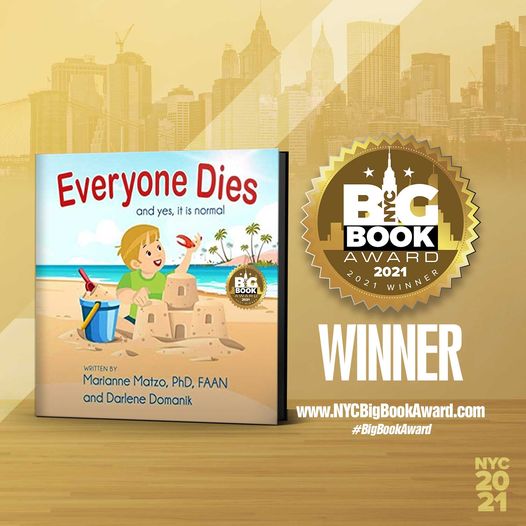
Everyone Dies (and yes, it is normal) is a story about a young boy named Jax who finds something special on the beach where he and his grandpa Pops are enjoying a wonderful day. Pops helps Jax understand that death is a normal part of life. This book provides an age appropriate, non-scary, comfortable way to introduce the important topic of mortality to a preschool child. Its simple explanation will last a lifetime. Autographed copies for sale at: www.everyonediesthebook.com. Also available at Amazon
Mourning Jewelry

We offer a way to memorialize your loved one or treasured pet with a piece of handmade jewelry. When people comment on it and the wearer can say for example “I received this when my mother died” which opens the conversation about this loss. All our jewelry is made with semi-precious stones and beads, vintage beads, and pearls. You can choose between earrings or bracelets and the color family. Learn More



Ne zaman öleceğim