
Colorectal cancer is the #1 killer for men and #2 for women under 50. Learn from the legacies of James Van Der Beek, André Ricciardi, and surviving the “New Face” of cancer.
In this Episode:
- 0:00 – Intro: Colorectal Cancer Cancer in Young Adults
- 02:35 – Recipe: Yummy Ham & Pickle Rollups
- 02:50 – “André Is An Idiot”: André Ricciardi’s Terminal Creative Legacy
- 05:38 – Celebrity Case Studies: James Van Der Beek & Catherine O’Hara
- 14:32 – Super Bowl Ad Alert: Multi-Cancer Tests & False Negatives
- 16:54 – The Reality Check: Lifestyle Risks & Charlie’s Personal Disclosure
- 30:44 – Tracey Emin: Reclaiming Life After Radical Pelvic Surgery
- 34:00 – Outro
Colorectal Cancer is a Killer that Can be Stopped
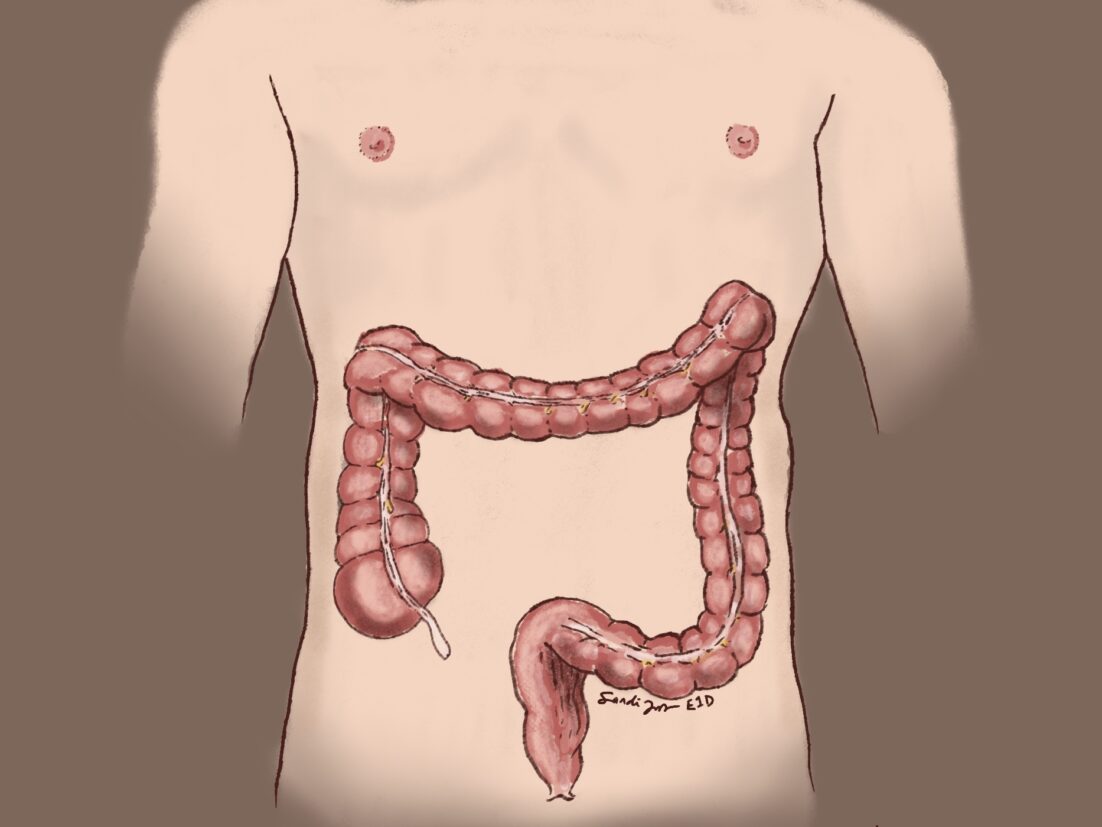
Colorectal cancer (cancer of the colon and rectum) is now the leading cause of cancer deaths in adults younger than 50. Rates have increased steadily over the past three decades, with the most dramatic rise seen in people in their 20s and 30s.
Early colorectal cancer often has no symptoms at all, which is why screening guidelines were recently lowered to begin at age 45. When caught early, the five-year survival rate is 91%. When detected after it has spread, survival drops dramatically.
Learn in this Episode:
- Why colorectal cancer is increasing in younger adults
- The subtle symptoms many people ignore
- How blood clots can complicate cancer
- Lifestyle factors linked to risk
- Why early-onset colorectal cancer tends to be more aggressive
- How to advocate for yourself if something feels “off”
If you notice blood in your stool, persistent abdominal pain, changes in bowel habits, unexplained weight loss, or fatigue from anemia — do not dismiss it. Speak up. Get evaluated. Early detection can save your life. [Learn More.]
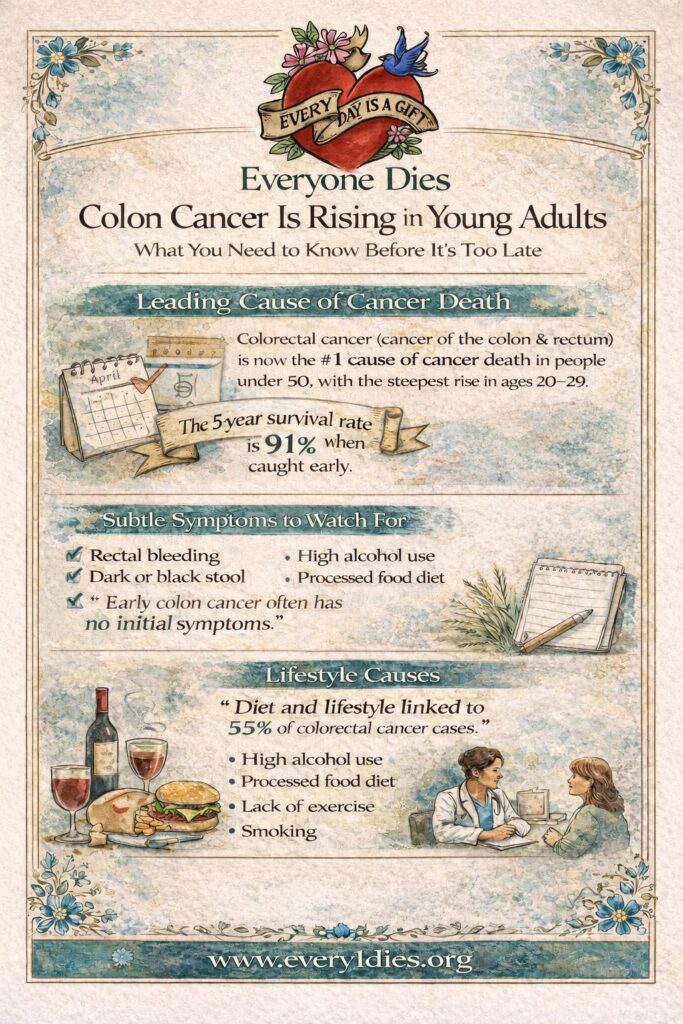
Colorectal Cancer Is Rising in Young Adults: Here’s What You Need to Know

Colorectal cancer is now the leading cause of cancer death in adults under 50. That statement surprises many people — especially those who consider themselves healthy, active, and low-risk.
Rates of colorectal cancer have increased 1–2% per year over the past 30 years. The largest increase is among adults aged 20–29. Because of this trend, screening recommendations were lowered from age 50 to age 45.
Why Early Detection Matters:
If colorectal cancer is found early, the five-year survival rate is 91%.
If it is found after spreading to distant organs, survival drops to 16%.
The challenge is that early colorectal cancer rarely announces itself.
Don’t Ignore These Subtle Symptoms:
- Blood in stool or rectal bleeding
- Dark or black stools
- Persistent abdominal cramping
- Change in bowel habits
- Narrow stools
- Ongoing constipation or diarrhea
- Unexplained weight loss
- Fatigue or weakness from anemia
Young adults often ignore these symptoms. Health care practitioners may not immediately suspect colon cancer in people in their 20s or 30s. That delay can be dangerous.
One study found that among younger patients with rectal bleeding, the average time to diagnosis was 271 days. Nearly half had metastatic disease by then.
Why Is Colon Cancer Increasing?
Researchers suspect a mix of genetics and lifestyle factors.
In the United States, 55% of colorectal cancers are attributed to lifestyle:
- Diet high in processed foods
- Physical inactivity
- Obesity
- High alcohol consumption
- Smoking
Healthy behaviors are associated with a 27–52% lower risk. Learn How diet and activity impact your internal environment.
Advocate for Yourself
If something feels off — do not ignore it.
Even if you are young.
Even if you are healthy.
Even if you exercise and eat well.
Speak up. Ask questions. Request evaluation.
Early-onset colorectal cancer can be more aggressive and is often diagnosed late. Doing nothing is not a good option. Taking action quickly can save your life.
The “Self-Advocacy” Checklist
If you have symptoms and are under 50, you might face “medical gaslighting” (being told you’re too young for cancer). Use these steps to push back:
- Log Your Symptoms: Document the frequency and appearance of blood, changes in bowel habits, or pain for at least 2 weeks.
- The New 45+ Standard: Remind your provider that the official screening age is now 45. If you are 45+, insurance is required to cover your screening.
- Family History: Be specific. Mention any relative who had polyps or colon/rectal cancer.
- Request a FIT Test: If your doctor won’t order a colonoscopy, ask for a Fecal Immunochemical Test (FIT). It’s a non-invasive stool test that can be a “first step” to justify further imaging.
From the Everyone Dies Archives:

- Deep Dive: Colorectal Cancer is Increasing in the Young (S5E16) – A deeper explanation of colorectal cancer, more on the shifting statistics and the “45 Rule.”
- Understanding the Biology: Why Does Cancer Exist? (S5E45) – See a visual breakdown of how a colon carcinoma develops from a single cell.
- Lifestyle & Prevention: Chronic Inflammation and Your Health (S4E32) – How diet and activity impact your internal environment.
References:
- ‘It was a little scary at times’: the hilarious, heartbreaking film about one man’s riotous death | Movies | The Guardian
- ‘Regrets? Number one: smoking. Number two: taking it up the wrong hole’: Tracey Emin on reputation, radical honesty – and Reform | Tracey Emin | The Guardian
- “André is an Idiot” Is a Legacy Worth Watching (Unless You’re an Idiot): https://www.sundance.org/blogs/andre-is-an-idiot-is-a-legacy-worth-watching-unless-youre-an-idiot/
- Siegel RL, Wagle NS, Jemal A. Leading Cancer Deaths in People Younger Than 50 Years. JAMA. Published online January 22, 2026. doi:10.1001/jama.2025.25467
- Alcalay, A., Wun, T., Khatri, V., Chew, H. K., Harvey, D., Zhou, H., & White, R. H. (2006). Venous thromboembolism in patients with colorectal cancer: incidence and effect on survival. Journal of clinical oncology : official journal of the American Society of Clinical Oncology, 24(7), 1112–1118. https://doi.org/10.1200/JCO.2005.04.2150
- James Van Der Beek of ‘Dawson’s Creek’ Dies of Colon Cancer at 48
Resources:
- Colon cancers are rising among the young: New study outlines the warning signs (medicalxpress.com)
- Mom Diagnosed With Stage 4 Colon Cancer at 38 Recalls 1st Symptom
“André Is An Idiot”: André Ricciardi’s Terminal Creative Legacy
André Riccardi sets out to chronicle his final journey after receiving a diagnosis he could have prevented [by following colorectal cancer screening guidelines], through comedic vérité storytelling and fantastical stop-motion interludes.
Recipe of the Week:
Yummy ham, pickle and cream cheese roll ups for an appetizer or a party! Secure the roll ups with toothpicks, and cut them into bite size pieces. Get the recipe at All Recipies.
:max_bytes(150000):strip_icc():format(webp)/580486-5585baefbf0b481b9b2fa4094c8af57c.jpg)

https://blog.feedspot.com/palliative_care_podcasts/

Everyone Dies: and yes, it is normal!
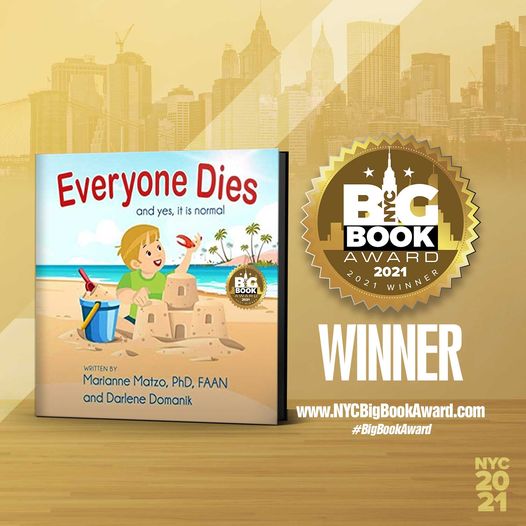
Everyone Dies (and yes, it is normal) is a story about a young boy named Jax who finds something special on the beach where he and his grandpa Pops are enjoying a wonderful day. Pops helps Jax understand that death is a normal part of life. This book provides an age appropriate, non-scary, comfortable way to introduce the important topic of mortality to a preschool child. Its simple explanation will last a lifetime. Autographed copies for sale at: www.everyonediesthebook.com. Also available at Amazon
Mourning Jewelry

We offer a way to memorialize your loved one or treasured pet with a piece of handmade jewelry. When people comment on it and the wearer can say for example “I received this when my mother died” which opens the conversation about this loss. All our jewelry is made with semi-precious stones and beads, vintage beads, and pearls. You can choose between earrings or bracelets and the color family. Learn More