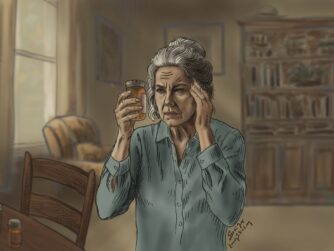


Why does making friends after 50 feel so unexpectedly difficult? In this episode, we dive into the reality of the adult “friendship recession”—why our social circles naturally shrink due to retirement, caregiving, relocation, or loss, and why loneliness is a serious physical health risk that we shouldn’t ignore.
But loneliness doesn’t have to be permanent. Tune in to learn how to overcome emotional wariness, navigate the modern utility of digital connection, and ultimately find a vital community later in life.
We also rebroadcast our S3E31 episode about friendship, with an interview with Chris who lost her best friend. We discuss her grief and challenges in seeking new connections, and share more ideas for reaching out.
Timestamps:
00:00 – Intro – Why is Making Friends after 50 So Hard?
00:56 – The Health Risks of Isolation and Reasons for Shrinking Friend Circles
04:44 – The Power of Intentional Effort
07:31 – S3E31 Intro – Friendship Rewards and Challenges
15:57 – Recipe: Friendship Cake
09:56 – Interview: The Grief and Coping When Your Best Friend Dies
49:48 – Do I Want Another Close Friend?
52:31 – How to Make New Friends
1:02:14 – Outro with Words from Joseph Campbell and Emily Dickenson
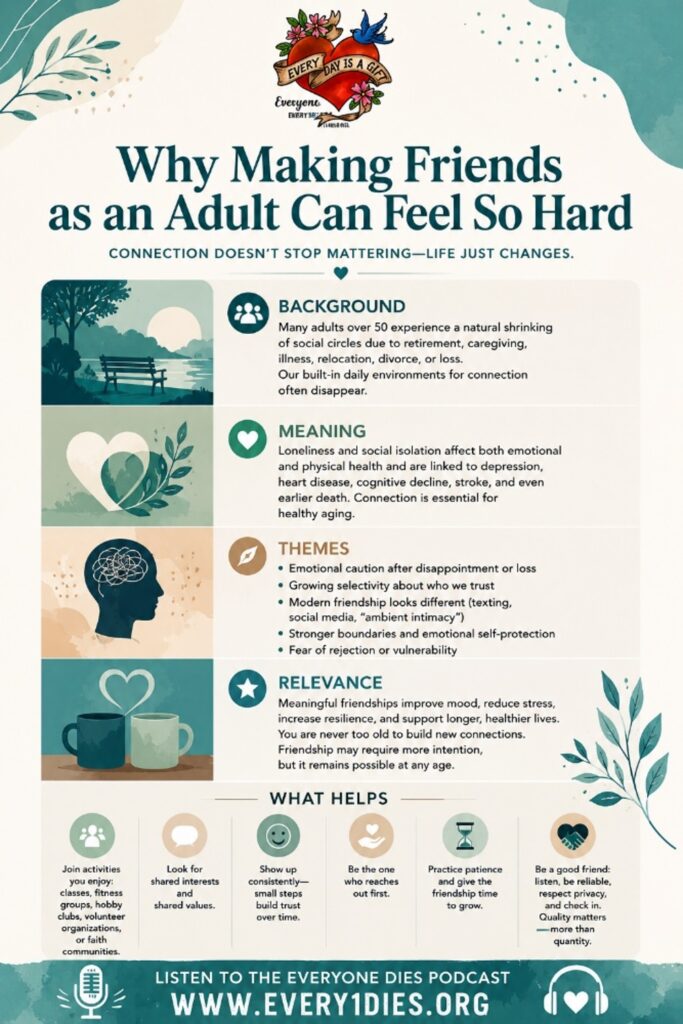
Why Making Friends as an Adult Can Feel So Hard
Understanding the Adult “Friendship Recession” After 50
Many adults are surprised by how difficult maintaining and creating connections becomes later in life. Busy social networks can quietly shrink over time due to natural life transitions such as:
- Retirement and Career Shifts: Losing the built-in, daily environments that once facilitated automatic social interaction.
- Evolving Family Dynamics: The onset of intense caregiving responsibilities or navigating divorce and relocation.
- Grief and Loss: Dealing with chronic illness, estrangement, or the profound bereavement of losing life-long friends.
The Hidden Health Risks of Loneliness and Social Isolation in Older Adults
Loneliness is far more than an uncomfortable emotional phase; current medical and sociological research shows it comes with measurable biological consequences. Chronic isolation in mature adults is actively associated with:
- Increased baseline risks for severe depression and anxiety.
- Higher statistical correlation with heart disease, stroke, and early mortality.
- Accelerated cognitive decline and physical frailty, proving that meaningful social connection is a vital pillar of healthy aging.
How Modern Technology Changes the Rules of Adult Friendship
Building community looks entirely different than it did a few decades ago. Today’s social landscape introduces unique hurdles:
- “Ambient Intimacy”: Digital interactions like texting, group chats, and social media replace face-to-face depth, leaving people feeling superficially connected but fundamentally isolated.
- Hyper-Focused Boundaries: While protecting emotional energy is healthy, a heightened fear of rejection or awkwardness can cause adults to default to emotional caution, keeping potential new companions at a distance.
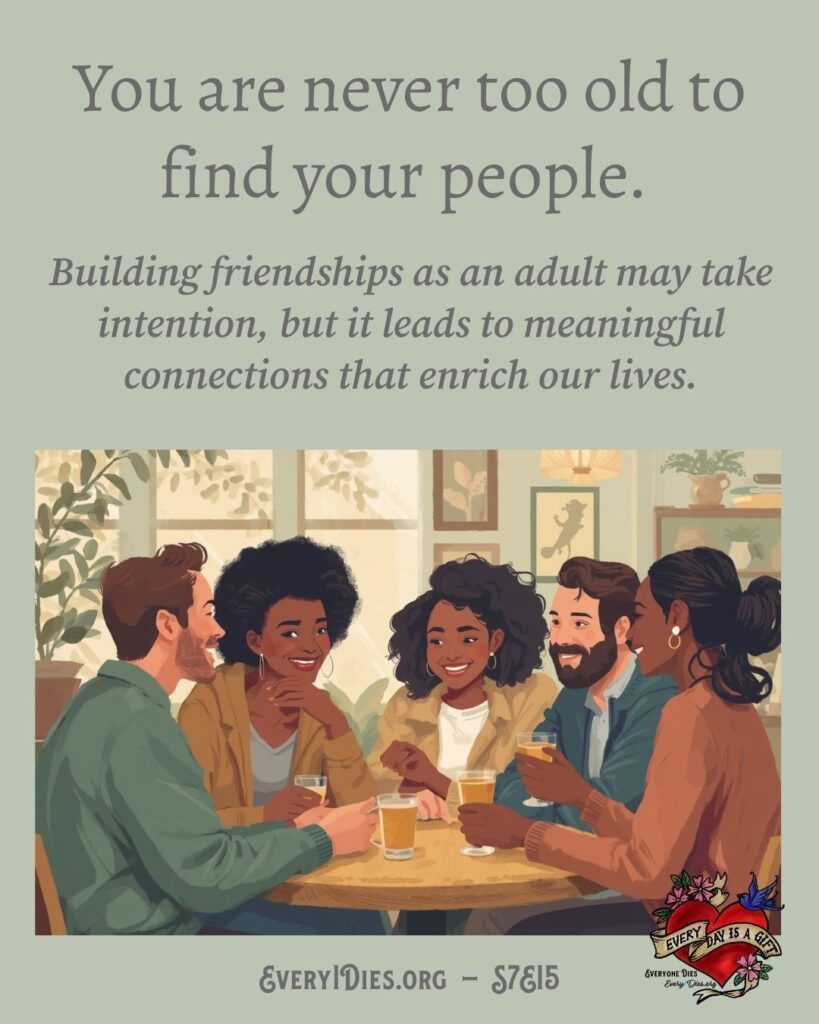
Practical Ways to Rebuild Social Connection and Find Your People Later in Life
Human beings never outgrow the core biological need to feel seen, valued, and emotionally safe. While adult relationships require intentionality and courage, developing deep trust is entirely possible at any stage of life through consistent, small steps:
- Leverage Shared In-Person Activities: Instead of forcing immediate closeness, focus on high-interaction environments. Join local volunteer organizations, continuing education classes, hobby clubs, fitness programs, or faith-based communities.
- Practice Flexible Companionship: Understand that peers in this age bracket are often balancing immense stressors like caregiving or health problems. True adult friendship thrives on reliability, empathy, and being an emotionally supportive, non-judgmental listener.
- Take the First Step: Reach out consistently. Send a text, accept an invitation, or introduce yourself to someone new. Most lasting connections are forged gradually through ordinary, repeated moments.
References:
- Beller, J., & Wagner, A. (2018). Loneliness, social isolation, their synergistic interaction, and mortality. Health Psychology, 37(9), 808–813 808-813. DOI:10.1037/hea0000605
- Carstensen, L. L. (2021). Socioemotional Selectivity Theory: The Role of Perceived Endings in Human Motivation. The Gerontologist, 61(8), 1188-1196. https://doi.org/10.1093/geront/gnab116
- Elhag, S., Niechcial, M. A., Potter, L., & Gow, A. J. (2025). Exploring the impact of community-based interventions on healthy older adults’ physical health, psychological wellbeing, and social connections: A systematic review. Ageing Research Reviews, 111, 102784. https://doi.org/https://doi.org/10.1016/j.arr.2025.102784
- Hoang, P., King, J. A., Moore, S., Moore, K., Reich, K., Sidhu, H., Tan, C. V., Whaley, C., & McMillan, J. (2022). Interventions Associated With Reduced Loneliness and Social Isolation in Older Adults: A Systematic Review and Meta-analysis. JAMA Network Open, 5(10), e2236676-e2236676. https://doi.org/10.1001/jamanetworkopen.2022.36676
- Kannan, V. D., & Veazie, P. J. (2023). US trends in social isolation, social engagement, and companionship ⎯ nationally and by age, sex, race/ethnicity, family income, and work hours, 2003–2020. SSM – Population Health, 21, 101331. https://doi.org/https://doi.org/10.1016/j.ssmph.2022.101331
- Lomanowska, A. M., & Guitton, M. J. (2016). Online intimacy and well-being in the digital age. Internet Interventions, 4, 138-144. https://doi.org/https://doi.org/10.1016/j.invent.2016.06.005
- Santini, Z. I., Jose, P. E., York Cornwell, E., Koyanagi, A., Nielsen, L., Hinrichsen, C., Meilstrup, C., Madsen, K. R., & Koushede, V. (2020). Social disconnectedness, perceived isolation, and symptoms of depression and anxiety among older Americans (NSHAP): a longitudinal mediation analysis. The Lancet Public Health, 5(1), e62-e70. https://doi.org/https://doi.org/10.1016/S2468-2667(19)30230-0
Resources:
- Why Making Friends as an Adult Is So Hard (and How to Find Your People)
- ‘It’s Rough Out Here’: A VICE Guide to Making Friends
- How to Make Friends as an Adult | Psychology Today
- How to Make New Friends as an Adult: 102 Ways to Try – Parade
- How To Make Friends As An Adult (8 Proven Tips That Actually Work)
Related Episodes:
- S3E31: When a Good Friend Dies
- S6E20: Ghosting, Cancer Edition – How to Find Support
- S6E1: How to Help Someone Feel Seen, Heard and Understood
- S6E46: Supporting Someone with Chronic Illness: How to Show Up Without Fixing

Use the Feedspot RSS reader to find more.

Everyone Dies: and yes, it is normal!

Everyone Dies (and yes, it is normal) is a story about a young boy named Jax who finds something special on the beach where he and his grandpa Pops are enjoying a wonderful day. Pops helps Jax understand that death is a normal part of life. This book provides an age appropriate, non-scary, comfortable way to introduce the important topic of mortality to a preschool child. Its simple explanation will last a lifetime. Autographed copies for sale at: www.everyonediesthebook.com. Also available at Amazon
Mourning Jewelry

We offer a way to memorialize your loved one or treasured pet with a piece of handmade jewelry. When people comment on it and the wearer can say for example “I received this when my mother died” which opens the conversation about this loss. All our jewelry is made with semi-precious stones and beads, vintage beads, and pearls. You can choose between earrings or bracelets and the color family. Learn More