


Caring for an aging partner alone takes a physical, emotional, and financial toll. Learn to address caregiver stress and seek support while problems are small.
What happens when the person you love also becomes the person you provide 24/7 physical care for? In this episode of Everyone Dies, Marianne and Charlie examine the rapidly growing reality of elder spousal caregiving as lifespans lengthen and family sizes shrink. We discuss:
- The “Godzilla Principle” of Caregiving: Why addressing small burnout signals early prevents total breakdown.
- The Weight of Pre-Bereavement: Grieving a partner while they are still here, and navigating the emotional conflict of sadness, anger, and guilt.
- The Financial Sinkhole: Asset spend-downs, long-term care insurance limits, and Medicaid realities.
- Practical Guidance: Finding local Area Agencies on Aging, avoiding scams, and joining peer support communities.
Timestamps:
- 00:00 – Introduction Ode to New Socks
- 03:24 – Recipe of the Week: “Guaczilla” Guacamole
- 03:56 – The “Godzilla Principle” Applied to Caregiver Burnout
- 08:40 – “Bambi Meets Godzilla” & Healthcare Systems
- 10:31 – Spousal Caregiving: The Growing Reality & Demographics
- 16:08 – Caregiving Resources & How to Avoid Scams
- 24:15 – In Memoriam: Juan Jose Valdez (Last Marine in Vietnam)
- 27:30 – Outro
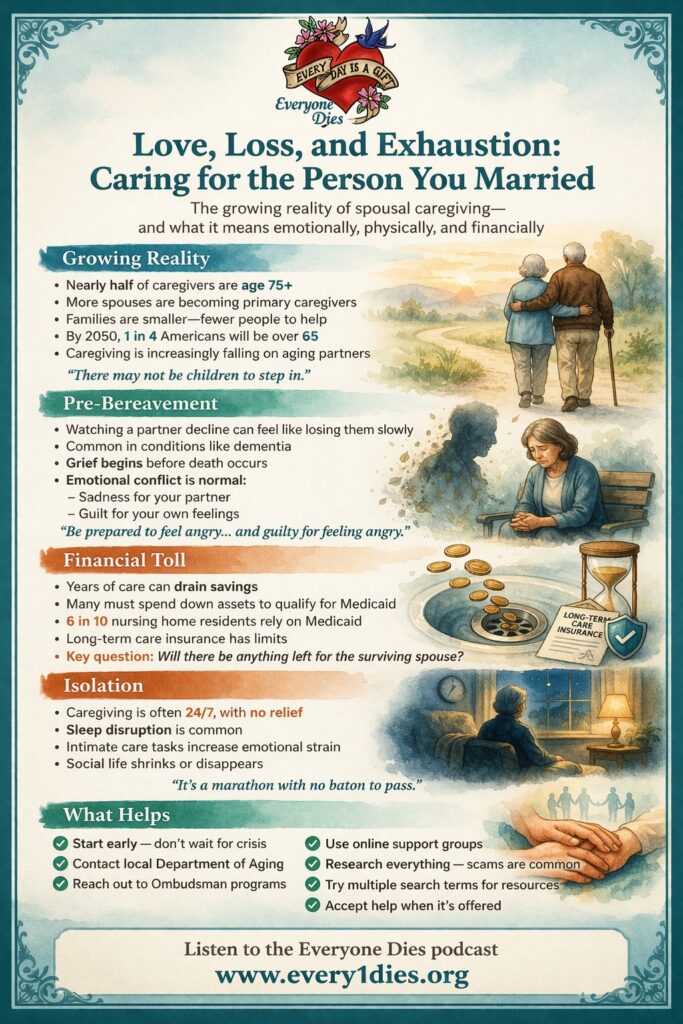
Love, Loss, and Exhaustion: Caring for the Person You Married
Caring for someone you love is often described as an act of devotion. But when that person is your spouse, caregiving becomes something more complicated—and far more demanding.
A Growing Reality
More older adults are now caring for their partners than ever before. According to data from the National Alliance for Caregiving and AARP:
- Nearly half of spousal caregivers are aged 75 or older.
- Many are managing long-term, complex health conditions with little to no professional training.
- With smaller family sizes and changing demographics, there are often no adult children available to step in.
A 24/7 Role With No Relief
Spousal caregiving is fundamentally different from other caretaking roles. It is constant, intimate, and often isolating:
- You live together and sleep under the same roof.
- You manage deeply personal tasks—such as bathing, dressing, and toileting—that spouses may be uncomfortable receiving from strangers.
- As gerontology experts point out, it’s a marathon with no baton to pass.
The Emotional Weight: Pre-Bereavement
Spousal caregivers often experience pre-bereavement—grieving their partner while they are still alive. Watching a partner’s personality or memory change due to conditions like dementia creates a complex web of emotions:
- Sadness for your partner’s decline.
- Anger at the situation.
- Guilt for feeling that anger or sadness in the first place.
“Be prepared to be angry. Be prepared to feel guilty because you’re angry. Be prepared to be sad… You’re sad for your husband. And you feel guilty that you’re feeling sad for yourself.” — Judith Nagle
The Financial Sinkhole
Years of full-time caregiving can decimate household finances. Medicaid remains the primary payer for 6 in 10 nursing home residents, but qualifying often requires spending down hard-earned savings and investments. This leaves surviving spouses asking a terrifying question: Will there be anything left for my own care?
Practical Steps Forward
- Apply the Godzilla Principle (Early Intervention): Address caregiver stress and seek support while problems are small; don’t wait for a total breakdown.
- Connect with Local Agencies: Reach out to your local or state Department of Aging or an Area Agency on Aging.
- Seek Out Support Groups: Online and community groups provide essential peer-to-peer practical tips (from diaper recommendations to navigating emotional burnout).
- Research Thoroughly: Verify resources and stay vigilant against scams targeting seniors.
Related Content:
- S3E41: A Caregiver’s Survival Guide: How to Help Yourself
- S1E47: Coping with Caregiver Grief and Burnout
- S7E06: Love, Dementia, and the Reality of “For Better or Worse”
References:
- Recipe of the Week: https://www.mexicoinmykitchen.com/chunky-guacamole-recipe/
- More seniors are now caregivers as they tend to spouses alone – The Washington Post
- Grandchildren step up as caregivers as America’s population continues to age – The Washington Post
- Aboulafia, G., Chen, A. C., & Grabowski, D. C. (2025). Asset Spend-Down and Medicaid Enrollment in Nursing Homes. JAMA Network Open, 8(12), e2546876-e2546876. https://doi.org/10.1001/jamanetworkopen.2025.46876
Resources:
- Caregiving in the U.S. 2025 – AARP Research Report
- https://www.dvidshub.net/video/528331/last-marine-leave-vietnam-speaks-memorial-day-event

https://blog.feedspot.com/palliative_care_podcasts/

Everyone Dies: and yes, it is normal!
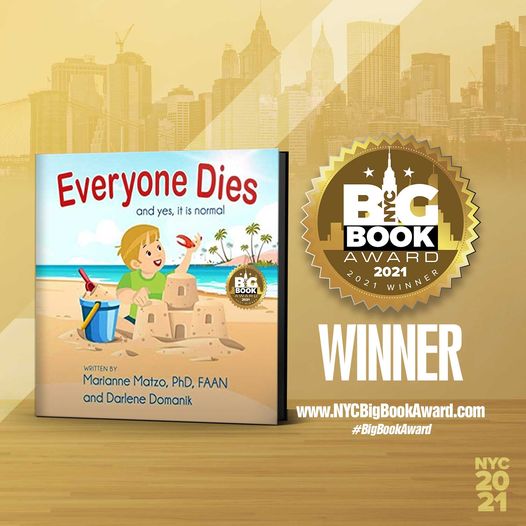
Everyone Dies (and yes, it is normal) is a story about a young boy named Jax who finds something special on the beach where he and his grandpa Pops are enjoying a wonderful day. Pops helps Jax understand that death is a normal part of life. This book provides an age appropriate, non-scary, comfortable way to introduce the important topic of mortality to a preschool child. Its simple explanation will last a lifetime. Autographed copies for sale at: www.everyonediesthebook.com. Also available at Amazon
Mourning Jewelry

We offer a way to memorialize your loved one or treasured pet with a piece of handmade jewelry. When people comment on it and the wearer can say for example “I received this when my mother died” which opens the conversation about this loss. All our jewelry is made with semi-precious stones and beads, vintage beads, and pearls. You can choose between earrings or bracelets and the color family. Learn More