


Many parents prepare for the sleepless nights of raising young children, but few expect the emotional complexity of parenting adults.
According to Pew Research, while 87% of parents view parenthood as central to their identity, relationships naturally evolve as adult children build independent lives. As careers, new families, and personal priorities take center stage, parents often face reduced contact, changing roles, and the unsettling realization that they are no longer at the center of their child’s world.
In this episode, we unpack:
- The Research Behind the Tension: Why unsolicited advice backfires, how expectations trigger conflict, and why strain can peak in middle age.
- Actionable Strategies: Practical approaches for respecting boundaries, communicating without blame, and finding personal fulfillment beyond the parenting role.
Whether your relationship with your adult child feels slightly distant or deeply complicated, this episode offers research-backed insights to help you navigate the shift from authority to connection.
Timestamps:
(Transcript)
- 01:27 – Netflix’s “Je m’appelle Agneta” – Adult Estrangement and a Reflection on Life Choices
- 04:56 – In Remembrance: Happy the Elephant (1971-2026)
- 08:59 – The Evolution of Parenting: From Caregiver to Adult Ties
- 12:04 – A New Lens on “The Giving Tree” – Asymmetric Devotion
- 17:31 – Why Tensions Rise: Research on Unsolicited Advice and Boundaries
- 20:46 – Constructive Solutions: Moving Beyond Avoidance and Conflict
- 24:38 – Adult Estrangement – Parent Boundaries and Reactions
- 30:44 – Barry Manilow – On the Road to Recovery
- 33:15 – Outro
Related Content:
- S6E48: When Adult Children Go No Contact: From Brooklyn Beckham to Yours
- S5E15: Gaslighting – What Does it Really Mean? All About Women and Gaslighting
- S6E41: Is it Just a Cough? What Barry Manilow’s Early-Stage Lung Cancer Diagnosis Can Teach Us
Parenting Adult Children: Understanding a Changing Relationship
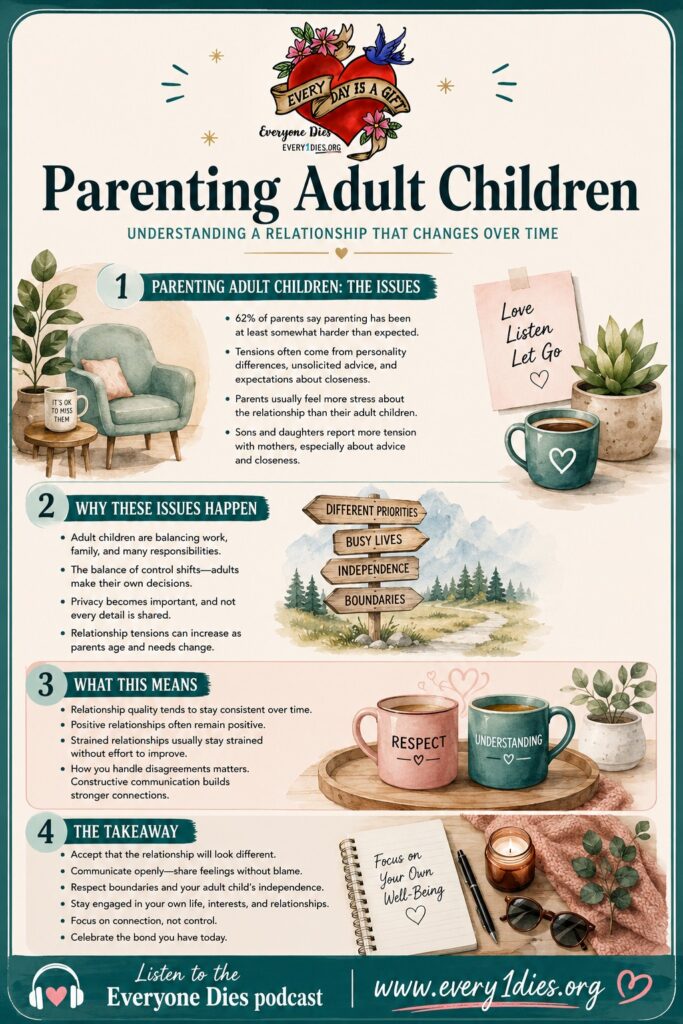
Many parents describe raising children as one of the most meaningful roles in their lives. Research from the Pew Research Center found that most parents consider parenthood to be one of the most important aspects of who they are. At the same time, many parents report that parenting has been more challenging than they expected.
Why Relationships Change as Children Reach Adulthood
While much attention is given to the challenges of raising young children, less discussion focuses on the changes that occur when children become adults. The transition from parenting a dependent child to relating to an independent adult often requires adjustments from both parents and adult children.
Research suggests that tensions between parents and adult children are common. These tensions do not necessarily indicate a poor relationship. Instead, they often reflect differences in expectations, life circumstances, and communication styles.
Parents and adult children may have different views of the relationship. Parents often remain highly invested in maintaining close family ties, while adult children may be balancing careers, relationships, children of their own, and other responsibilities. These competing demands can affect the amount of time and energy available for family relationships.
“Parenting doesn’t end as children grow—it evolves into learning who they are, understanding their world, and learning how to step back.”
Common Sources of Tension Between Parents and Adult Children
Studies suggest parents and adult children frequently experience friction across several core areas:
- Long-Term Stability: Relationship quality tends to remain consistent; positive bonds generally stay positive, while strained connections require intentional effort from both sides to improve.
- Unsolicited Advice: Adult children often perceive advice as criticism or interference, whereas parents view it as natural support and guidance.
- Asymmetrical Investment: Research by Birditt and colleagues indicates parents often report greater emotional distress about tensions because they feel more invested in maintaining close ties.
- Shifts in Control & Privacy: As adult children take full ownership of their choices, parents must adjust to having less involvement and less insight into day-to-day decisions.
Practical Strategies for Fostering a Healthy Adult Connection
Adapting to this stage of life involves developing new expectations and communication habits. Key strategies for maintaining a strong bond include:
- Boundary-Respecting Communication: Share feelings and concerns openly while fully respecting your adult child’s independence, choices, and privacy.
- Constructive Problem-Solving: Focus on understanding each other’s perspectives and finding solutions rather than resorting to avoidance, arguments, or hostility.
- Flexible Expectations: Accept that adult children may be less available, contact may be less frequent, and family traditions may change while still reflecting a deep, caring connection.
- Outside Fulfillment: Maintain personal hobbies, friendships, and social connections outside the family to support your own well-being and reduce pressure on adult children.
References:
- Recipe of the Week: shockinglydelicious.com/irish-elephant-ears/
- Happy, Bronx Zoo Elephant at Center of Animal Rights Case, Is Dead at 55 – The New York Times
- Barry Manilow Admits His ‘Lungs Aren’t Ready Yet’ amid Cancer Recovery
- Barry Manilow, 82, shares health update amid lung cancer diagnosis
- Parenting in America Today: A Survey Report (2023) | Pew Research Center
- Birditt, K. S., Miller, L. M., Fingerman, K. L., & Lefkowitz, E. S. (2009). Tensions in the parent and adult child relationship: Links to solidarity and ambivalence. Psychology and aging, 24(2), 287–295. https://doi.org/10.1037/a0015196
- The Giving Tree – poem by Shel Silverstein | PoetryVerse
Resources:
- How To Improve the Relationship With Your Adult Children, Psychologists Explain – Parade
- 14 Phrases To Use With Adult Children When You’re Both Getting Triggered, Therapists Explain – Parade
- The Most Common Form of Gaslighting in a Family, Psychologists Explain – Parade
- The Giving Tree, Read by Kieth Carradine

Use the Feedspot RSS reader to find more.

Everyone Dies: and yes, it is normal!
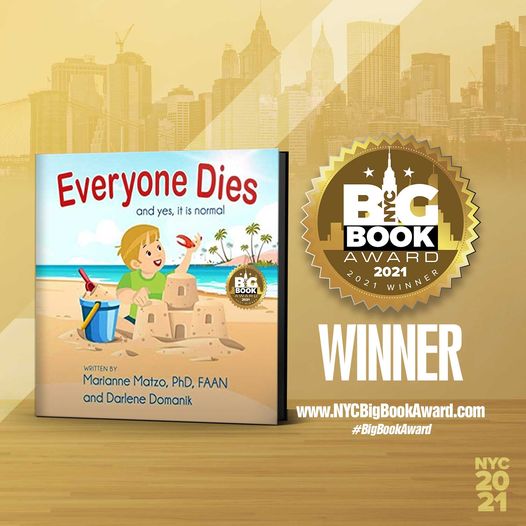
Everyone Dies (and yes, it is normal) is a story about a young boy named Jax who finds something special on the beach where he and his grandpa Pops are enjoying a wonderful day. Pops helps Jax understand that death is a normal part of life. This book provides an age appropriate, non-scary, comfortable way to introduce the important topic of mortality to a preschool child. Its simple explanation will last a lifetime. Autographed copies for sale at: www.everyonediesthebook.com. Also available at Amazon
Mourning Jewelry

We offer a way to memorialize your loved one or treasured pet with a piece of handmade jewelry. When people comment on it and the wearer can say for example “I received this when my mother died” which opens the conversation about this loss. All our jewelry is made with semi-precious stones and beads, vintage beads, and pearls. You can choose between earrings or bracelets and the color family. Learn More