


Navigating Family Boundaries, Secrecy, and Difficult End-of-Life Decisions with Grace and Respect
When a loved one chooses medical aid in dying (MAiD), the decision rarely affects only one person. Conflicting religious beliefs, strained family histories, and requests for secrecy can quickly turn an intensely personal choice into a painful ethical dilemma. Drawing on two real cases from philosopher Kwame Anthony Appiah’s New York Times Magazine column, we explore how families can honor personal autonomy while protecting emotional well-being.
In This Episode:
Transcript
- 00:00 – Intro: Medical Aid in Dying: Should You Tell Family Who Disagree?
- 03:04 – Recipe – Spinach Corn Dip
- 03:47 – “We Will Not Walk Away” Staying, Even in Disagreement
- 06:15 – Case 1: Telling a Religious Father About an Assisted Death
- 13:41 – Ethics of Autonomy, Coercion, and Conditional Goodbyes
- 17:35 – Case 2: Estranged Family, Secrecy, and Emotional Boundaries
- 31:47 – Outro and Resources
What Are Boundaries in End-of-Life Medical Decisions?
In healthcare and family dynamics, boundaries are the clear, compassionate limits that define where one person’s autonomy and emotional responsibility end and another’s begin. When someone is facing a terminal illness or considering medical aid in dying, boundaries are not walls meant to shut loved ones out; they are guardrails that keep stress, guilt, and conflict from overtaking the time that remains.
| Boundary Type | What It Looks Like in Practice |
| Emotional Boundaries | Caring deeply about a relative’s distress without absorbing responsibility for solving their crisis or managing their grief. |
| Communication Boundaries | Inviting a dissenting family member to say goodbye on the clear condition that they will not argue or try to change the patient’s mind. |
| Information & Secrecy Boundaries | Recognizing that an unsolicited request to keep a life-altering secret does not bind you if sharing helps keep someone safe or supported. |
Two Real Ethical Dilemmas Around Medical Aid in Dying
Dilemma 1: Telling a Family Member Who Strongly Opposes Assisted Dying
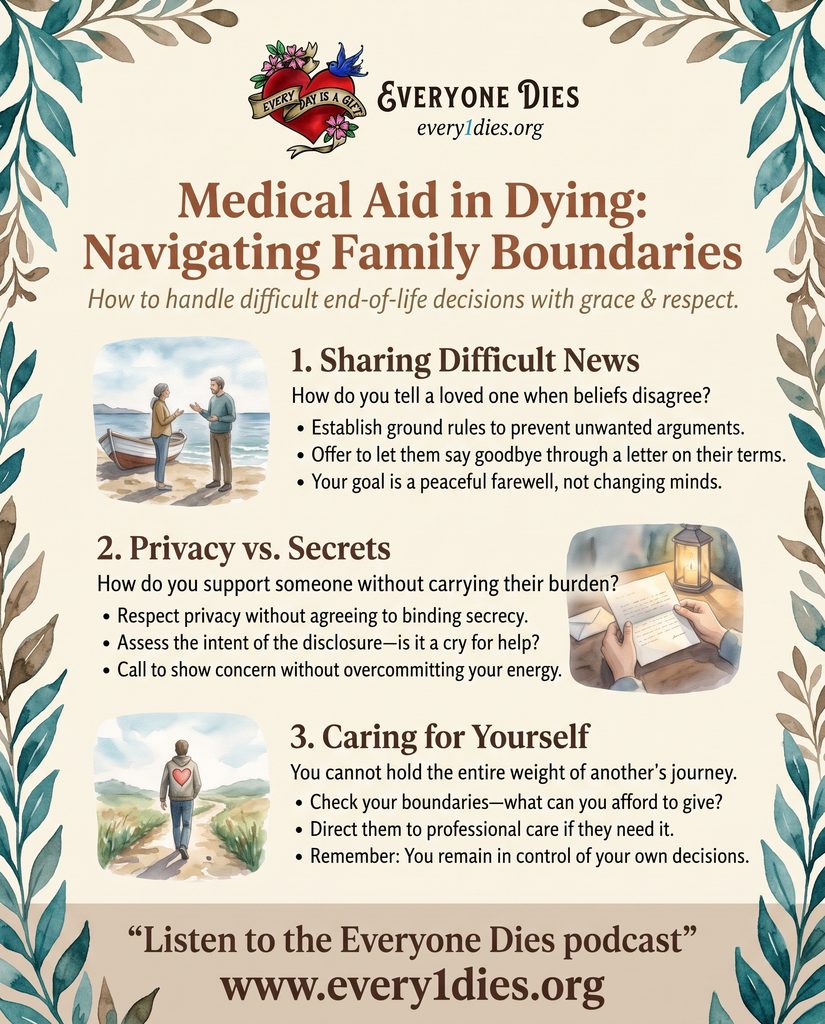
In the first case, a husband supports his wife’s decision to pursue an accompanied suicide after living with multiple sclerosis for more than 25 years. He wants his religious father to have the chance to say goodbye, yet fears his father’s opposition and unsolicited medical advice will add distress to his wife’s final weeks.
“You can tell him what’s going on while stressing that he can come and say his goodbyes only if he promises not to dispute the situation with her… he’ll have to figure out a way to be supportive if he wants to be part of the life that remains to her.” — Kwame Anthony Appiah
Dilemma 2: When an Estranged Relative Asks You to Keep MAiD a Secret
In the second case, an estranged aunt with chronic physical and mental health struggles leaves tearful voicemails stating she plans to seek medical aid in dying, then deletes them and asks her niece not to tell her parents. The niece wants to respond with kindness without being pulled into an overwhelming, unsustainable caregiving dynamic.
Unique Takeaways: Protecting Peace, Autonomy, and Your Own Capacity
- Prioritize the Dying Person’s Peace: The person facing the end of life should not have to spend their remaining energy defending their values or comforting others who disagree with their medical choices.
- Offer Structured Ways to Say Goodbye: When face-to-face conversations carry a high risk of conflict, inviting a dissenting relative to write a single letter—to be read on the patient’s own terms—honors both grief and boundaries.
- Remember That Unagreed Secrets Are Not Binding: You are not morally trapped by a secret someone drops on you without your prior consent, especially if silence isolates them or puts an unfair burden on you.
- Separate Intent from Eligibility: Saying “I am seeking MAiD” is not the same as qualifying for it; formal clinical evaluations, waiting periods, and legal safeguards exist precisely so family members do not have to act as gatekeepers.
- Match Your Support to Your Real Capacity: Expressing warmth and encouraging someone to connect with their medical team is a complete, compassionate response—you do not have to become their sole emotional lifeline.
Frequently Asked Questions
Should you tell family members who oppose medical aid in dying? You do not owe anyone information that will harm a dying loved one’s peace, though offering a conditional goodbye—with a firm agreement not to argue—can prevent lasting family regret while protecting the patient.
Am I obligated to keep a relative’s assisted dying plans a secret? No; an unsolicited request for secrecy does not create an absolute moral obligation. Consider whether keeping the secret protects the person’s privacy or simply isolates them from appropriate medical and family support.
How do you set boundaries with a family member about medical decisions? State clearly what you can and cannot offer, focus on the patient’s stated wishes rather than debating beliefs, and redirect complex clinical or emotional needs back to qualified healthcare professionals.
Related Listening
Understanding Medical Aid in Dying & Legal Safeguards
- S7E34: Medical Aid in Dying: Who Qualifies, How It Works, and Why Many Never Use It — Explore the clinical eligibility rules, waiting periods, and hospice coexistence discussed in last week’s companion episode.
- S1E43: Euthanasia – Dying with Dignity — Unpack the historical, legal, and ethical distinctions between medical aid in dying, euthanasia, and patient autonomy.
Navigating Family Conflict & Caregiver Boundaries
- S7E12: Caregiver Burnout and Setting Boundaries — Learn practical strategies for drawing healthy emotional and time limits when family expectations exceed your capacity.
- S1E44: “Mom’s Assisted Death”: A Daughter’s Response — Hear a personal reflection on navigating a parent’s assisted death and how families process the experience together.
- S6E40: Leaving a Legacy of Peace: A Gentle Approach to End-of-Life Planning — Discover how to start difficult conversations about end-of-life wishes before a crisis forces hard choices.
References:
- Recipe of the Week: Spinach Corn Dip
- The Ethicist (The New York Times Magazine): “My Wife Plans to End Her Life. Should I Tell My Very Religious Father?” (March 15, 2024) and “My Difficult Aunt Told Me She’s Seeking Assisted Death. Should I Get Involved?” by Kwame Anthony Appiah.
- Dignity Day: A Guidebook for Anyone Searching for Comfort and Clarity Relative to the End-of-Life Medications by Gabrielle Elise Jimenez. MAiD can be both difficult and beautiful for everyone involved. This book is designed to offer clarity, remove fear and uncertainty, and give permission to everyone at the bedside to feel whatever they need to feel, but to still stay present for someone they love. Contains the Poem “We Will Not Walk Away”
Resources:
The Ethicist – The New York Times
Navigating Medical Decisions & Family Disagreements:
- The Conversation Project (Institute for Healthcare Improvement) — Your Conversation Starter Guide & “What Matters to Me Workbook”
- Offers practical conversation prompts to help families shift away from arguing over specific medical choices and focus instead on what matters most to the patient, including guidance for situations where relatives strongly disagree.
https://theconversationproject.org
- Offers practical conversation prompts to help families shift away from arguing over specific medical choices and focus instead on what matters most to the patient, including guidance for situations where relatives strongly disagree.
- Compassion & Choices — End-of-Life Consultation & Planning Tools
- Why it fits: Provides clear explanations of how medical aid in dying works, voluntary participation safeguards, and tools to document who should—and should not—be consulted about your care.
https://compassionandchoices.org
- Why it fits: Provides clear explanations of how medical aid in dying works, voluntary participation safeguards, and tools to document who should—and should not—be consulted about your care.
Family Boundaries, Estrangement & Broken Relationships:
- Nedra Glover Tawwab, MSW, LCSW — Set Boundaries, Find Peace and Drama Free: A Guide to Managing Unhealthy Family Relationships
- Harriet Lerner, PhD — The Dance of Connection: How to Talk to Someone When You’re Mad, Hurt, Scared, Frustrated, Insulted, Betrayed, or Desperate ― A Talking Guide

Use the Feedspot RSS reader to find more.

Everyone Dies: and yes, it is normal!

Everyone Dies (and yes, it is normal) is a story about a young boy named Jax who finds something special on the beach where he and his grandpa Pops are enjoying a wonderful day. Pops helps Jax understand that death is a normal part of life. This book provides an age appropriate, non-scary, comfortable way to introduce the important topic of mortality to a preschool child. Its simple explanation will last a lifetime. Autographed copies for sale at: www.everyonediesthebook.com. Also available at Amazon
Mourning Jewelry

We offer a way to memorialize your loved one or treasured pet with a piece of handmade jewelry. When people comment on it and the wearer can say for example “I received this when my mother died” which opens the conversation about this loss. All our jewelry is made with semi-precious stones and beads, vintage beads, and pearls. You can choose between earrings or bracelets and the color family. Learn More